Khadija Leah Chunga
Community Driven Change
“I want to bring the idea to my community that as women we don’t have to stay behind (men).”
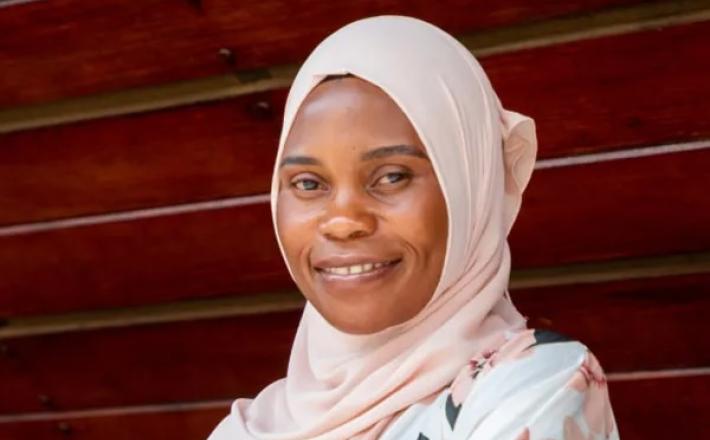
Khadija Chunga is a 34-year-old politician from Malawi. Her journey into politics highlights the power of an individual, and the change they can create. She was heavily influenced by her role model Abida Mia, who she calls an ‘iron lady’. Coming from a highly populated area of Malawi with a large Muslim community, she felt compelled to be the change she wanted to see.
Her passion for politics began when she started to reflect on the issues that plagued her neighborhood. She noticed three important areas that need improvement: education, infrastructure, and health. For her, education and child labor stood out as key issues. Most children only complete grades 1-5 before being forced to work for their families’ businesses. “I always tell them (members of the community) that school is number one (priority), and that they have to work hard at all levels from primary to university”. Through donations, she distributes school supplies and actively encourages students to continue their education.
The second main issue is healthcare. Khadija noted that people in her community do not seek professional treatment at hospitals and instead they attempt prayer to cure their illness or go to a traditional healer. She believes that there is a strong correlation between both issues, lack of education and health problems: “someone who did not go to school might underestimate the importance of professional healthcare”. She is a strong advocate for more health centers within the community.
The third main issue is the lack of good infrastructure. Khadija understands that many improvements are needed; from roads, to schools, houses and access to clean water. She is determined to be an agent of positive change within her community and to show that women can do not only what men can but even do it “twice as well.”
Khadija’s journey has not been easy. She is the first politician in her family, facing backlash and resistance from them, as well as her community. In the beginning, her husband did not accept her political dreams, and many of her husband’s friends tried to discourage him from allowing her into the political field. She also had to deal with false accusations on social media. However, these trials only revealed the close relationships she had built within her community, where she had worked on the ground for many years. Many members of the community came to Khadijas' defense. This gave her the courage to keep going and to not give up on her dream. Throughout this journey, Khadija learned an important lesson: “I have to be strong and put my voice out. And I don’t have to be too emotional. If something bad happens, whether social media or life, I don’t have to react immediately and I don’t have to go out and show immediately. I have to first calm myself down and then go out and defend myself.”
By refusing to give up, she soon gained the support of more members of her community, as they began to see the positive impacts of her work. Her determination and hard work allowed her to earn the support of local influential religious leaders, and eventually her husband, who Khadija now calls her “number one support system”.
She is continuously committed to being the voice for her community “someone has to stand up and say that in our community we need this, please bring this. And I am going to make It happen”. This newfound sense of support made her feel as though she had chosen the right path and reaffirmed her belief in herself. This belief was expanded upon at the Young Women’s Empowerment Academy in Malawi, held by International IDEA, where she was able to learn more skills and confidence in her abilities. It also reaffirmed her desire to run in the general elections.
Through the academy she recognized that women are capable of doing anything, even if they are often underestimated. She says that “with the academy they have shown us women, we can. That we have to carry our courage when we are going out. They have told us that we can do what men can do, even twice as well.” By interacting and communicating with the other women at the academy, she recognizes that many of the struggle’s faced are the same, and she remains committed to keep fighting to prove that without women there is no democracy.

Hear from women leading change in the political space share their experiences and insights.

Explore a wide-range of audio-visual resources on key topics of gender equality.

Hear from a diverse list of panelists and guests as they reflect on critical issues pertaining Women in Politics.