Josephine Fotso

Deputée à l'Assemblée Nationale du Cameroun
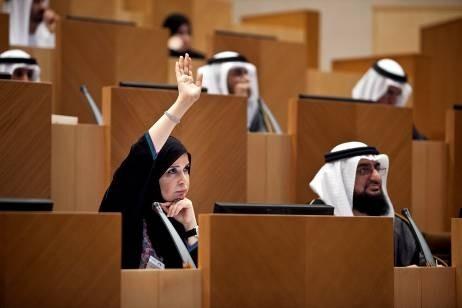
Democracy and the equal participation of men and women in the political arena are closely intertwined. No parliament or any decision-making body can claim to be representative without the participation of both men and women. As stated in the Universal Declaration on Democracy adopted by the Inter-Parliamentary Union’s Member Parliaments in 1997, "The achievement of democracy presupposes a genuine partnership between men and women in the conduct of the affairs of society in which they work in equality and complementarity, drawing mutual enrichment from their differences."
Recent years have seen a steady increase in the number of women in parliament, though the world average of less than 22 percent remains far from the goal of parity between women and men. The election of women to the highest positions of state and government in several countries has also contributed to the changing face of politics.
While the road to election is a difficult one, the challenges for women do not stop there. Once women enter parliament or other bodies, they are faced with many new challenges. Parliament is traditionally a male-oriented domain where the rules and practices have been written by men. It is, therefore, an ongoing challenge to transform parliament into a gender-sensitive environment, to ensure that actions are gender-sensitive and to guarantee that gender is mainstreamed throughout the legislature.


iKNOW Politics a organisé une discussion en ligne sur les stéréotypes en matière d’attribution des taches et responsabilités professionnels.
Ma place en politique se joint au Réseau des Tables régionales de groupes de femmes du Québec pour dévoiler aujourd'hui la dernière capsule Web de sa campagne « Aux élections municipales 2013 : Je me lance! ».
Les élections législatives du 16 septembre ont non seulement donné la majorité absolue au parti présidentiel, le FPR, mais ont également renforcé la majorité des femmes au Parlement. Un exemple unique au monde.
A l’issue des élections législatives qui ont eu lieu cette semaine au Rwanda, les femmes représentent désormais près de deux tiers des élus de la chambre basse du Parlement.
Le Conseil du statut de la femme (CSF) dénonce un accroc à son indépendance dans le dossier de la Charte des valeurs québécoises.
La chancelière allemande Angela Merkel a beau être considérée comme "la femme la plus puissante du monde", en 33 ans de carrière politique elle n'a pas plus joué la carte féminine que Margaret Thatcher.