Le cadre permanent de concertation de la femme congolaise CAFCO en collaboration avec Olof Palm International Center ''OPC'' avec l'appui de l'agence internationale suédoise de coopération au développ
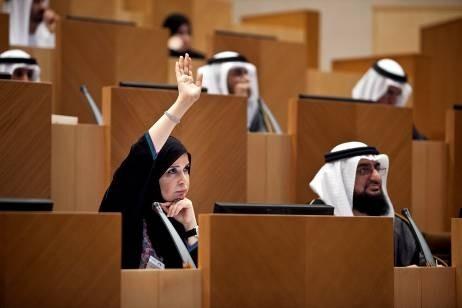
Democracy and the equal participation of men and women in the political arena are closely intertwined. No parliament or any decision-making body can claim to be representative without the participation of both men and women. As stated in the Universal Declaration on Democracy adopted by the Inter-Parliamentary Union’s Member Parliaments in 1997, "The achievement of democracy presupposes a genuine partnership between men and women in the conduct of the affairs of society in which they work in equality and complementarity, drawing mutual enrichment from their differences."
Recent years have seen a steady increase in the number of women in parliament, though the world average of less than 22 percent remains far from the goal of parity between women and men. The election of women to the highest positions of state and government in several countries has also contributed to the changing face of politics.
While the road to election is a difficult one, the challenges for women do not stop there. Once women enter parliament or other bodies, they are faced with many new challenges. Parliament is traditionally a male-oriented domain where the rules and practices have been written by men. It is, therefore, an ongoing challenge to transform parliament into a gender-sensitive environment, to ensure that actions are gender-sensitive and to guarantee that gender is mainstreamed throughout the legislature.
Le cadre permanent de concertation de la femme congolaise CAFCO en collaboration avec Olof Palm International Center ''OPC'' avec l'appui de l'agence internationale suédoise de coopération au développ
Le parlement indien a adopté la semaine dernière, à la quasi-unanimité, une loi qui instaure un quota de plus d’un tiers de femmes à la Chambre basse et dans les assemblées régionales.
Ce dimanche, 18 des 60 candidats élus étaient des femmes (pour 42,8% de femmes inscrites sur les listes), ce qui représente moins d'un tiers de l'assemblée parlementaire.
Le résultat des sénatoriales à la Réunion offre un équilibre presque parfait. Sur les quatre sièges à pourvoir, deux vont la droite et deux à la gauche, mais personne au centre.
Le Vietnam est déterminé à consolider et à renforcer les relations entre les deux pays, a affirmé Vuong Dinh Huê, ajoutant que le Parti communiste du Vietnam (PCV) souhaitait coopérer étroitement avec le
Comment a-t-on pu imaginer un jour que la démocratie pouvait se construire sans les femmes ?
Plus de cinquante femmes politiques dont des candidates aux élections législatives participent depuis mardi 12 septembre, à Bunia, à un séminaire de renforcement de capacités sur le pouvoir décisionnel d
Cinq femmes vont faire partie du nouveau gouvernement, contre deux précédemment, sur 19 ministres.