Le dernier e-bulletin de l'UIP est maintenant disponible sur le site de notre partenaire, l'Union Interparlementaire.
Post-conflict and Transitional Participation
According to the Ploughshares, in 2005, armed conflicts raged in 27 countries. In five of them, casualties exceeded 100,000 people, and the indirect costs in human capital, infrastructure and effect on future development are beyond estimation. The transition period begins when wars end through negotiated settlements or other means. With international and regional assistance, parties seek ways to deter the cycle of conflict by establishing a stable government to protect and provide for its citizens.
Formally and informally, women around the world are contributing to post-conflict reconstruction in the areas of security, justice and reconciliation, governance and socio-economic development. In 2000, the United Nations (UN) Security Council passed resolution 1325, a landmark decision mandating the participation of women in peace processes. Since the adoption of the resolution, awareness of the importance of including women in peace and reconstruction processes has grown enormously. Yet, implementation of the resolution’s mandate remains sporadic and ad hoc, and the gaps in practice are vast. Nonetheless, women’s participation in post-conflict reconstruction processes continues to increase.
In Sri Lanka, pressure by women’s organizations led to the establishment — within the structure of the formal negotiations — of a ten-member Subcommittee on Gender Issues in 2002. In Northern Ireland, women representatives were trusted as mediators during conflict negotiations, with such trust stemming from the women’s platform of respect for human rights, inclusion and equality. In Haiti, the women’s ministry and women’s organizations participated in a consultative process, resulting in the UN mission incorporating women’s priorities into its mandate and establishing the Disarmament, Demobilization and Reintegration Programme. In Rwanda, women formed the first cross-party parliamentary caucus composed of both Hutus and Tutsis, addressing issues of concern to women from all political parties. In Sierra Leone, a women’s task force was established to foster women’s participation in the design of the Truth and Reconciliation Commission and the special unit investigating war crimes. According to the World Bank, in Afghanistan, efforts by the international community and local women’s organizations have led to girls accounting for 40 percent of all children attending school in 2003, compared to only 9 percent before the war.
While significant and encouraging, such examples and best practices do not equate with the systematic inclusion of women in peace processes. It remains critical to amplify the role and contribution of women during political transitions to capitalize on this window of opportunity.
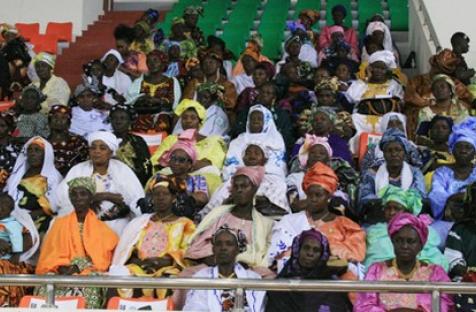
La journée panafricaine des femmes a été une occasion saisie par les autorités maliennes en particulier le ministre de la Famille, de la Promotion de la Femme et de l'Enfant, Mme alwa Ichata Sahi et le secrétariat exécutif régionat de l'Organisation panafricaine des femmes (OPF) pour inviter
Mayerlis Angarita, fondatrice de la Fondation Raconter pour Vivre est elle-même une rescapée du conflit armé en Colombie. L’organisation, soutenue en partie par ONU-Femmes, rassemble plus de 840 rescapées de la région de Montes de Maria, dans le nord de la Colombie.
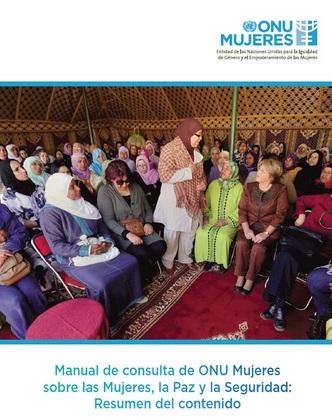
Manuel d'ONU Femmes sur les femmes, la paix et la sécurité
Ce recueil de connaissances vise à sensibiliser, à inspirer des politiques, à former à l’appui, à mobiliser et à partager les leçons acquises au niveau de la mise en œuvre des programmes d'action sur les femmes, la paix et la sécurité, y compris la résolution 1325 du Conseil de sécurité des Natio
Participation des femmes aux négociations de paix : Présence et influence
PLUS DE DIX ANS APRÈS L’ADOPTION À L’UNANIMITÉ DE LA RÉSOLUTION 1325 (2000) DU CONSEIL DE SÉCURITÉ DES NATIONS UNIES, L’ABSENCE FRAPPANTE DES FEMMES DES NÉGOCIATIONS DE PAIX OFFICIELLES RÉVÈLE L’EXISTENCE D’UN FOSSÉ INQUIÉTANT ENTRE LES ASPIRATIONS QUI RESSORTENT DE LA MULTITUDE D’ENGAGEMENTS
La participation des femmes dans les processus de paix et la prise de décision politique en République Démocratique du Congo
La question de la place et du rôle des femmes dans la vie politique et sociale de leur pays est au cœur des débats actuels sur le développement.
Event
LIBERIA: Referendum Constitutionnel 23 août 2011
Genre et Post-Conflit : Comment promouvoir le rôle des femmes dans la reconstruction post-conflit
Pagination
- Page précédente
- Page 10
- Page suivante