Europe

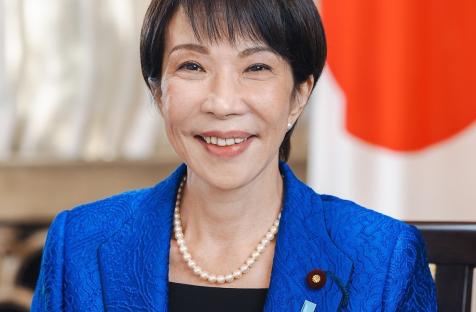
Over the past two centuries, the European region has been the seat of many international milestones for women in politics. Various countries continue to achieve new high points for women’s political participation, inspiring women throughout the world. However, there is still great disparity in women’s political participation within the region itself.

More

From the Library

Combating Trafficking in Persons: A Handbook for Parliamentarians

Jointly produced by the IPU and UNODC, the Handbook on Combating Trafficking in Persons is intended to encourage parliamentarians to take an active part in stopping human trafficking. It contains a compilation of international laws and good practices developed to combat human trafficking. It offers guidance on how national legislation can be brought in line with international standards. It outlines measures to prevent commission of the crime of trafficking in persons, to prosecute offenders and to protect victims. It also contains advice on how to report on this crime and how to enlist civil society in the cause.

Tags:

Empowering Parliaments through the Use of ICTs

The study, published by the United Nations Development Programme, has developed an analytical framework that focuses on the three core functions of Parliaments - legislation, representation and oversight - and establishes links between them. It provides concrete examples of the importance of ICTs for the empowerment and increased credibility of parliamentary institutions.

Tags:

Assessing Legislation - A manual for legislators

It aims at providing the legislators with the necessary tools that would help them in assessing legislations and proposing them to promote social and democratic change in their countries. The guide highlights and discusses several important topics such as the role of the legislator in facilitating socio-political and economic change, the legislative theory, and the methodology for problem solving, in addition to assessing the technical sufficiency for the proposed law.

Tags:

Enhancing Women’s Political Participation: A Policy Note for Europe and the Commonwealth of Independent States

This Policy Note presents a set of pragmatic recommendations that will enable policy makers to enhance women’s political participation in the region. These measures are the product of six national roundtable discussions organized in 2008 in Bosnia and Herzegovina, Georgia, Kyrgyzstan, Poland, Turkey and Ukraine as well as a regional conference in Turkey in December 2008. This Policy Note also presents the current status of, and opportunities for women’s participation in leadership and decision-making processes in the region. Based on the evidence and regional data collected and analysed, this Policy Note is for parliamentarians, government officials, legislators, political party members, civil society organizations working on enhancing women’s political participation and media with the recommended policy and action options in the following three areas:

1) Legal and institutional frameworks to promote women’s political participation;

2) Mechanisms and strategies to promote women’s political participation; and

3) Partnerships for women’s political participation: civil society organizations and the media.

Tags:

Women in Politics 2010 (Poster)

This poster-sized map is a "snapshot" of the presence of women in executive and legislative branches of government as of January 2010. The poster provides information on the percentage of women in ministerial ranks, women in parliaments and women in the highest decision-making bodies, as well as information on the ministerial portfolios held by women throughout the world.

Tags:

IPU: Beijing goals on women in politics still unmet, new report finds

Submitted by iKNOW Politics on Wed, 2010-03-03 09:45
Summary: 

New York/Geneva, 3 March 2010 - No. 336

Taking stock of women’s political participation today gives cause for guarded satisfaction. Fifteen years after the Fourth World Conference on Women in Beijing, overall improvements have been registered in parliamentary and executive spheres of government. Still, the target of gender balance in politics is far off in too many countries. In the words of Anders B. Johnsson, Secretary General of the Inter-Parliamentary Union (IPU), “Things have certainly improved, but not nearly as much as we would want them to”.

Body: 

This is the main conclusion of a new survey on progress and setbacks of women in parliament released by the IPU. The survey is being published along with a new World Map of Women in Politics 2010, a poster-size map produced in cooperation with the United Nations Division for the Advancement of Women showing the number of women politicians by country and region.

Parliaments
By the start of 2010, the global average for the proportion of women parliamentarians reached a high of 18.8 per cent, compared to 1995, when it stood at 11.3 per cent. This equates to an average 0.5 percentage point gain per year. Ms. Rachel Mayanja, the UN Secretary-General’s Special Adviser on Gender Issues, noted that ECOSOC had set a target of 30 per cent women in leadership positions to be met by 1995. “We are a far cry from this goal. But we are determined to finish the Beijing agenda. We cannot afford any further delays in action to achieve the gender equality goals, including for women’s political participation.”

While overall progress has been slow, some counties have progressed at a much faster pace than others. The number of parliamentary chambers reaching the 30-per-cent target now stands at 44 (16.7%) spread across 38 countries. This is a six-fold increase over 1995, when just seven chambers in seven countries achieved this goal. The range of 30 per cent-plus chambers is diverse and includes 16 in Europe, 13 in the Americas, 11 in Africa and four in the Asia-Pacific region. The number of chambers with a membership of 10 per cent or less women members has more than halved, from 62 per cent in 1995 to 27 per cent today.

However, it is clear that challenges to women’s political empowerment remain in all regions. In several parliaments there have only ever been a handful of women, and the number of parliamentary chambers where no women have seats has not shown any dramatic decline, dropping from 13 in 1995 to 10 today. Women’s advancement into leadership positions in parliament has been much slower than the improvement in access to parliament. From 24 in 1995, there were 35 women Presiding Officers at the helm of parliaments at the start of 2010.

Ministerial positions

For women in the Executive and Heads of State, overall progress is even slower than at the parliamentary level. As shown in the World Map, women count for just nine out of the 151 elected Heads of State (6%) in 2010, up from just eight women leaders in 2005.

On average, women hold 16 per cent of ministerial posts. In total, 30 countries have more than 30 per cent women members, with Cape Verde, Finland, Norway and Spain achieving over 50 per cent women ministers. At the other end of the spectrum, the number of countries with no women ministers has increased — from 13 in 2008 to 16 in 2010. The majority of these States are found in the Arab region, the Caribbean and the Pacific Islands.

Compared with 2008, there is more diversification in terms of the portfolios held by women. As with previous years, however, women tend to dominate portfolios related to social affairs, children and youth, women’s affairs, and increasingly the environment.

Detailed information on dedicated web page at: IPU.

Established in 1889 and with its Headquarters in Geneva, Switzerland, the IPU - the oldest multilateral political organization in the world - currently brings together more than 150 affiliated national parliaments and eight associated regional assemblies. The world organization of parliaments also has an Office in New York, which acts as its Permanent Observer to the United Nations.

Contacts:

In Geneva: Ms. Luisa Ballin, IPU Information Officer. Tel.: ++41 22 919 41 16, e-mail: lb@mail.ipu.org and cbl@mail.ipu.org

In New York: Ms. Julie Ballington, IPU Programme Specialist, Gender Partnership Programme. Tel. ++1 202 557 58 80; e-mail jb@mail.ipu.org; ny-office@mail.ipu.org


Tags:

International IDEA: More women in politics for complete democracy

Submitted by iKNOW Politics on Mon, 2010-03-01 09:22
Summary: 

International IDEA secretary general Vidar Helgesen said his organisation is committed to addressing this challenge where women are not adequately represented in spheres of power. IDEA is in Botswana to discuss the audit report on Botswana's general elections held last year.

Helgesen met opposition politicians and ruling party politicians with a view to strengthening cooperation between Botswana and IDEA and discuss the African Union Charter on Democracy, Elections and Governance.

Body: 

To read the complete news story Mmegi Online.


Tags:

UNDP: 54th Commission on the Status of Women - Beijing Plus 15

Submitted by iKNOW Politics on Fri, 2010-02-26 15:09
Summary: 

An overview of UNDP's engagement at the 54th Commission on the Status of Women (CSW), to be held from March 1 to March 12, 2010.

Body: 

This CSW is particularly notable as it will undertake a 15-year review of progress toward gender equality since the landmark Beijing Conference for Women in 1995. UNDP's focus during the CSW will be to underscore how progress on the Beijing Platform for Action’s 12 critical areas of concern will accelerate progress on the MDGs. Making this link – between gender equality and the MDGs – will also be important for the upcoming MDG Summit in September. The following Key Messages, Key Facts and event poster underscore this theme.

UNDP is organizing, co-hosting and participating in several notable events during the CSW. They include panel discussions on:

# The Price of Peace: Financing Gender Equality in Post-Conflict Recovery and Reconstruction. Co-hosted by UNDP and UNIFEM. Panelists include Mary Robinson Mary Robinson, President, Realizing Rights: The Ethical Globalization Initiative and formerly President of Ireland and UN High Commissioner for Human Rights, Ingrid Fiskaa, Norwegian State Secretary for International Development, Judy Cheng-Hopkins, Assistant Secretary-General for Peacebuilding Support, and Jordan Ryan, Assistant Secretary-General, and Director of the Bureau for Crisis Prevention and Recovery, UNDP.

# Gender Equality and Climate Change: Opportunities and Challenges for the MDGs. Co-hosted by The International Alliance for Women, GCCA, UNDP, UNIFEM WEDO. Panelists include, Ambassador Melanne Verveer, US Ambassador for Global Women’s Affairs, Heidi Hautala, Chair, Finnish Council for Gender Equality and H.E. Ambassador Claude Heller, Permanent Mission to the United Nations, Mexico.

# Vision for a Better World: From Economic Crisis to Equality. Co-hosted by UNDP, IDRC and the Permanent Missions to the UN of Canada and Nicaragua. Panelists include Suzanne Clément, Coordinator/Head of Agency, Status of Women Canada, and Nafis Sadik, Special Adviser to the UN Secretary-General and Special Envoy for HIV/ AIDS in Asia.

# Take Action Now: The Pathway from Beijing to 2015. Co-hosted by UNDP, UNIFEM and the Governments of Denmark and Egypt. Panelists include Elizabeth Salguero, Parliament of Bolivia, Emily Sikazwe, Executive Director of Women for Change, Zambia and Ines Alberdi, Executive Director of UNIFEM.

# Launch of the Agenda for Accelerated Country Action for Women, Girls, Gender Equality and HIV, a UNAIDS event.
Panelists include . Ms. Asha Rose Migiro, Deputy Secretary-General of the United Nations, Ms. Helen Clark, UNDP Administrator, Mr. Michel Sidibé, UNAIDS Executive Director (moderator) and Annie Lennox, Advocate for women, girls and HIV.

UNDP is also organizing and participating in panel discussions, breakfasts and side meetings on such topics as democratic governance and women’s rights; women, HIV and human rights; resourcing home-based caregivers in Africa; and ensuring women’s equitable participation and leadership in reconstruction in Haiti. For a complete list of side events involving UNDP, please see the attached flyer.

Daily updates on CSW events and sessions will be posted on GenderNet. You can also view the main agenda and full list of side events on the official CSW website. For further information about UNDP’s participation in the CSW, contact Kim Henderson in the Gender Team.


Tags:

Spain: Abortion law wins final approval by parliament

Submitted by iKNOW Politics on Wed, 2010-02-24 15:21
Summary: 

Spain's senate Wednesday approved controversial legislation easing women's access to abortion, giving a final stamp of approval to the law which will now enter into force within four months. Leire Pajin from Prime Minister Jose Luis Rodriguez Zapatero's Socialist Party said the law paid a 'debt' that society had owed women.

Body: 

To read the complete story please visit Monsters and Critics.


Tags:
Advanced Search