The Pacific Islands Forum Leaders Meeting in Rarotonga, Cook Islands, last month committed to a revi
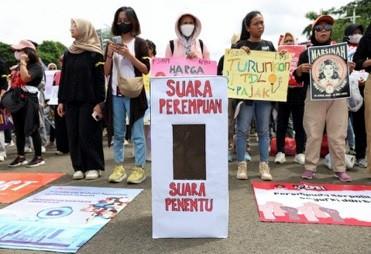
Advocacy and lobbying are effective tools for gender advocates, male champions, civil society, and other stakeholders to hold leaders accountable to their commitments on concrete, measurable actions that guarantee women can fully and equally enjoy their rights. These include the ability to exercise freedom and choices, go to school, live free from violence, earn equal pay for equal work, and meaningfully engage in decision-making and political processes. Advocacy groups can collectively put pressure their leaders for legislative reforms to protect and promote women’s rights and concerns, which may require coalition-building, fundraising, civic education, awareness-raising and consensus-building on key issue platforms. Influencing legislation itself may require lobbying to convince policy makers and legislators to address specific issues relevant to gender equality and women’s empowerment, which may involve introducing or revising legislation and policy.
The Pacific Islands Forum Leaders Meeting in Rarotonga, Cook Islands, last month committed to a revi
Stakeholders have advocated the implementation of gender-inclusive policy-making to address the challenges facing women in the country.
In a significant development, representatives from major political parties have unequivocally expressed their commitment to advancing women’s political participation.
Globally, approximately 736 million women — almost one in three — endure violence at least once in their life.
Since 2005 UBCM has participated in international projects that support local government development through missions in the Philippines, Vietnam, and Cambodia.
There is increase in politically motivated violence against women in Zimbabwe, manifesting as rape and sexual assault, direct violence and hate speech, the Zimbabwe Human Rights NGO Forum (The Forum) has said.
The United Nations Women (UN Women) has called for an increase in women’s political participation in Nigeria.
In any country, the political empowerment of women is generally possible with two routes — the first is to reserve seats for women in legislature by means of legislation and the second is to have provision for quotas for women candidates within political parties while n