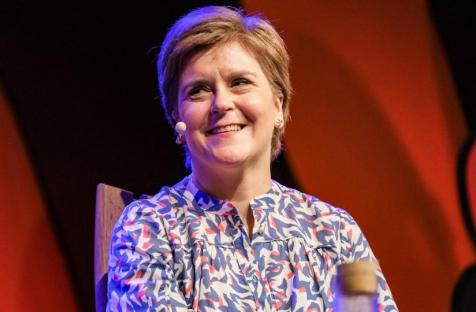
Nicola Sturgeon said she fears the forthcoming council elections will see equal representation go “backwards” as women are reluctant to enter the “toxic” world of politics.
Women make up only 23.5% of Members of Parliament according to the latest available data of the Inter-Parliamentary Union. While significant strides in women’s political participation have been made since the adoption of the Beijing Platform for Action in 1995, which set Member States’ target of achieving gender balance in political decision-making, women are still underrepresented in political decision-making at all levels and gender balance remains an aspirational goal. Gains in women’s participation have been notable in countries that have taken proactive steps to support women’s political participation, including reforming or amending discriminatory laws, taking concrete action to address violence against women in politics and gender discrimination within parliaments, addressing gender-specific barriers, and supporting women in all forms of decision-making including at local level and in executive government.
Nicola Sturgeon said she fears the forthcoming council elections will see equal representation go “backwards” as women are reluctant to enter the “toxic” world of politics.
Parliaments have a key role in ensuring not only that everyone is properly represented in decision-making, but also that legislation and government actions take account of the needs and experiences of women and men on an equal basis.
The number of women in parliament is consistently low throughout the Asia-Pacific region. Many factors contribute to this situation, but studies suggest that one major factor relates to the way that women are treated on social media.
Women make up over half of Myanmar’s population, yet significant obstacles remain for women to be able to participate in political processes and to achieve equal representation in Myanmar’s state institutions.
The world walked into 2021 with the shadow of COVID-19 looming large over its head. As well as posing a major health risk, the pandemic had also caused economic and social upheaval.
Sitting at her desk with the Central African flag behind her, Beatrice Epaye’s sustained gaze hints at courage and determination. And she has both in quantities.
By Rumbidzai Kandawasvika-Nhundu
Women's political representation is not only meaningful in terms of fulfilling the quota of 30 percent within the parliament, but also it affects substantive matters such as gender-friendly policies.
Congress Vice-President and Rapporteur on the South-Med Partnership, Xavier Cadoret (France, SOC/G/PD), welcomed the positive dynamic in Morocco in strengthening women’s political participation as