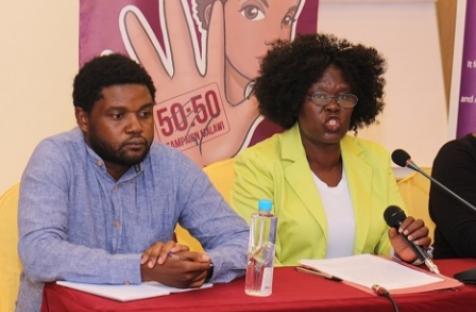
Gender Focused Civil Society Organisations have called on government to act on recent acts of violence against politically active women.
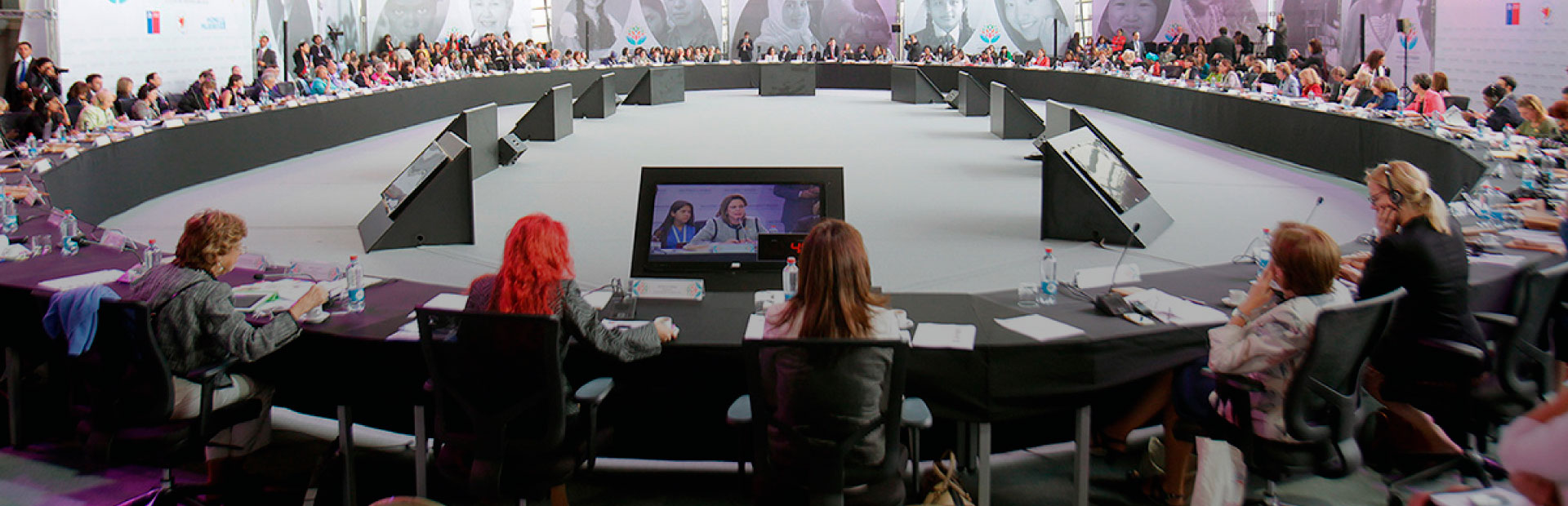
While there have been important advances in women’s leadership in politics, as of November 1 2017, women make up only 7.2% of Heads of State and 6.2% Heads of Government. Data on women representatives in local government, including as mayors, heads of villages and towns, is not well collected and analyzed. The adoption of an SDG indicator on women’s representation in local government is a great step forward in tracking progress on gender balance, allowing for the systematic collection and analysis of data on women in local government. Women’s access to and continued role in leadership positions is challenged by a range of barriers, including discriminatory laws and practices, as well as social norms that prescribe traditional roles and attitudes towards women’s participation in leadership and decision-making roles. Proactive gender-equality policies within political parties and local government structures, including quotas and special temporary measures, gender-sensitive approaches to electoral processes, support networks, mentoring, training, and engagement of male champions, can all help promote women’s role in political leadership.
Gender Focused Civil Society Organisations have called on government to act on recent acts of violence against politically active women.
It’s been suggested that the rise of women's interest in Irish politics could have been directly attributable to the introduction of gender quotas.
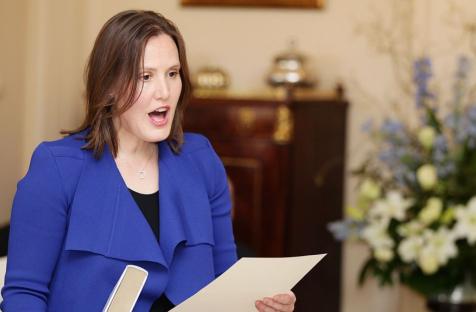
Australia’s Minister for Women Kelly O’Dwyer said Saturday she will quit politics for personal reasons at this year’s election, adding to the list of female politicians to leave the ruling party, some citing disunity, bullying and intimidation.
This paper is part of a Gender Briefing Series to support women’s meaningful pa
This paper is part of a Gender Briefing Series to support women’s meaningful participation and the integration of gender perspectives in
This paper is part of a Gender Briefing Series to support women’s meaningful participation and the integration of gender p
It's perhaps more likely than ever that the next U.S. president could be a woman.
By Jill Filipovic,
By Jill Filipovic,
As many political analysts see democracy weakened by introverted, xenophobic parties and autocratic leaders, a glimmer of hope is offered by a new generation of candidates and voters.