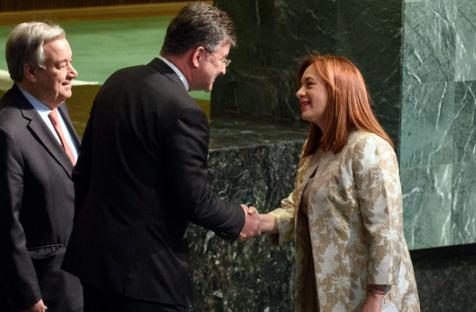
The United Nations General Assembly on Tuesday elected Ecuadorean Foreign Minister María Fernanda Espinosa Garcés, President of its upcoming 73rd session; only the fourth woman to hold that position in the history of the world body, and the firs
While there have been important advances in women’s leadership in politics, as of November 1 2017, women make up only 7.2% of Heads of State and 6.2% Heads of Government. Data on women representatives in local government, including as mayors, heads of villages and towns, is not well collected and analyzed. The adoption of an SDG indicator on women’s representation in local government is a great step forward in tracking progress on gender balance, allowing for the systematic collection and analysis of data on women in local government. Women’s access to and continued role in leadership positions is challenged by a range of barriers, including discriminatory laws and practices, as well as social norms that prescribe traditional roles and attitudes towards women’s participation in leadership and decision-making roles. Proactive gender-equality policies within political parties and local government structures, including quotas and special temporary measures, gender-sensitive approaches to electoral processes, support networks, mentoring, training, and engagement of male champions, can all help promote women’s role in political leadership.
The United Nations General Assembly on Tuesday elected Ecuadorean Foreign Minister María Fernanda Espinosa Garcés, President of its upcoming 73rd session; only the fourth woman to hold that position in the history of the world body, and the firs
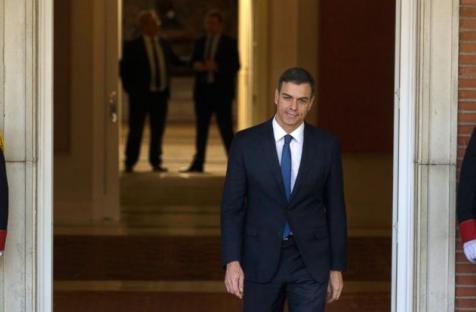
List as of 7 June 2018.
Spain joins a handful of countries where women hold at least half of ministerial portfolios.
1. Spain
List as of 7 June 2018.
Spain joins a handful of countries where women hold at least half of ministerial portfolios.
1. Spain
Spain's new Socialist government announced Wednesday a female-dominated Cabinet, including women appointed to key positions overseeing the national economy, finance and defense.
Women in Africa are not generally found in leadership positions. Research shows that women are not perceived to have the skills, knowledge or social status needed to bring about meaningful change in post-conflict environments.
The rapid expansion of electoral gender quotas in the past few decades has been met with considerable scholarly and public attention.
Women are largely under-represented in governments and at the top of big businesses around the world. Could the answer be as simple as a 'concrete floor' created by those with the power to change things?
A growing number of single women are running for public office. In order to beat their opponents, they may need to shatter some unfair stigmas first. Lily Espinoza Ploski is a Latina single mom to a 14-year-old son.