Dr Wan Azizah Wan Ismail's childhood ambition was to become a doctor and cure disease. Now that she is Malaysia's most powerful female politician, she says her mission is to improve women's rights.
While there have been important advances in women’s leadership in politics, as of November 1 2017, women make up only 7.2% of Heads of State and 6.2% Heads of Government. Data on women representatives in local government, including as mayors, heads of villages and towns, is not well collected and analyzed. The adoption of an SDG indicator on women’s representation in local government is a great step forward in tracking progress on gender balance, allowing for the systematic collection and analysis of data on women in local government. Women’s access to and continued role in leadership positions is challenged by a range of barriers, including discriminatory laws and practices, as well as social norms that prescribe traditional roles and attitudes towards women’s participation in leadership and decision-making roles. Proactive gender-equality policies within political parties and local government structures, including quotas and special temporary measures, gender-sensitive approaches to electoral processes, support networks, mentoring, training, and engagement of male champions, can all help promote women’s role in political leadership.
Dr Wan Azizah Wan Ismail's childhood ambition was to become a doctor and cure disease. Now that she is Malaysia's most powerful female politician, she says her mission is to improve women's rights.
Female lawmakers, in a country where women make up 52 percent of the population, account for around 10pc of the overall MPs in both the national and regional legislatures.
The Zimbabwe Gender Commission (ZGC) yesterday expressed concern over attacks on female politicians in the country, which has manifested in many forms, including psychological violence.
Former MDC-T deputy president Thokozani Khupe in February spent most of Morgan Tsvangirai’s funeral holed up in a hut, fearing for her life, as party youths threatened her with violence.
Democratic state Comptroller Susana Mendoza says the party’s panel on sexual harassment issues will go beyond that subject to look at ways to recruit more women to run for public office.
Women across the UK have marched together to create a living artwork, to mark 100 years since the first British women won the vote.
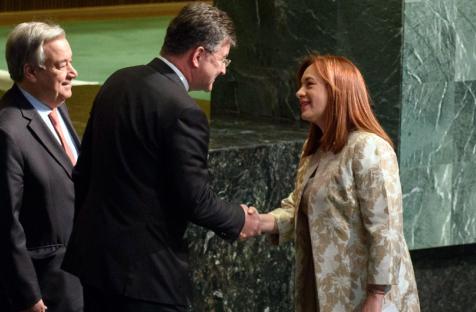
María Fernanda Espinosa Garcés is the fourth woman in the UN's history to be elected President of the General Assembly.
The United Nations General Assembly on Tuesday elected Ecuadorean Foreign Minister María Fernanda Espinosa Garcés, President of its upcoming 73rd session; only the fourth woman to hold that position in the history of the world body, and the firs