
Women's Leadership
While there have been important advances in women’s leadership in politics, as of November 1 2017, women make up only 7.2% of Heads of State and 6.2% Heads of Government. Data on women representatives in local government, including as mayors, heads of villages and towns, is not well collected and analyzed. The adoption of an SDG indicator on women’s representation in local government is a great step forward in tracking progress on gender balance, allowing for the systematic collection and analysis of data on women in local government. Women’s access to and continued role in leadership positions is challenged by a range of barriers, including discriminatory laws and practices, as well as social norms that prescribe traditional roles and attitudes towards women’s participation in leadership and decision-making roles. Proactive gender-equality policies within political parties and local government structures, including quotas and special temporary measures, gender-sensitive approaches to electoral processes, support networks, mentoring, training, and engagement of male champions, can all help promote women’s role in political leadership.
Show on Home Page
Yes
Image
Icon

Banner Image

June 8, 2023
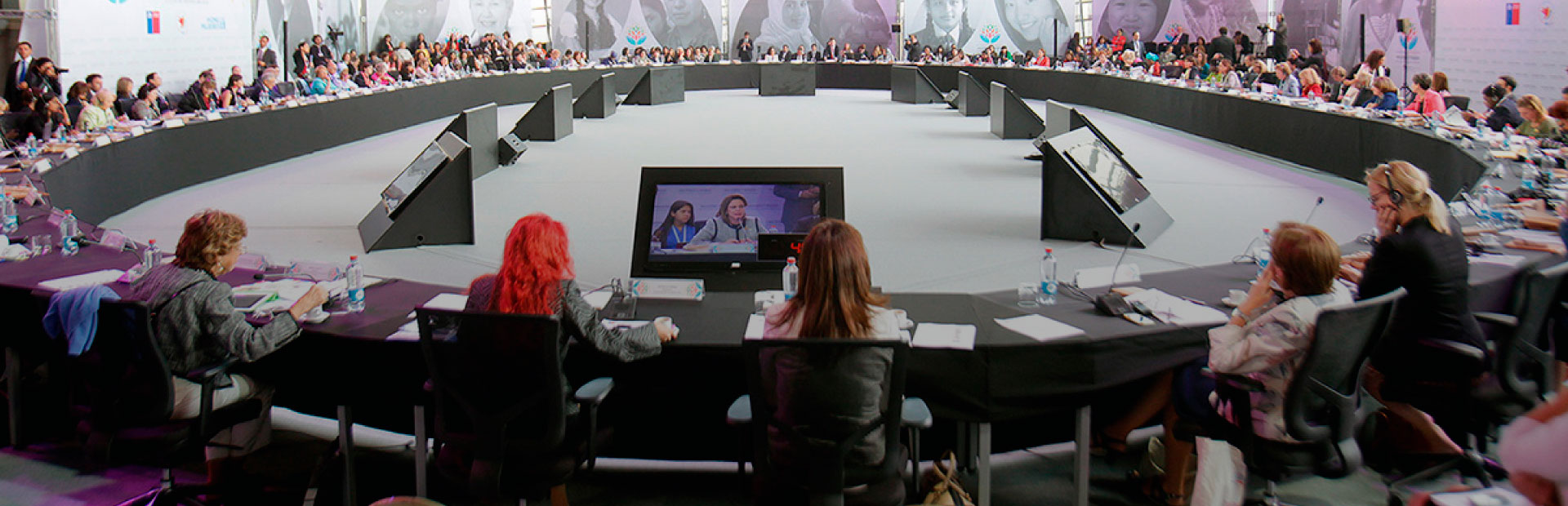
Women political leaders gather in Bellagio, Italy for summit hosted by the Georgetown Institute for Women, Peace and Security and The Rockefeller Foundation
Normal
0
-->


Kuwaiti women still struggle to find ‘rightful place’ in political narrative

Who is Mudhawi? I had asked. Dr AlanoudAl Sharekh, the quiet, unassuming award-winning academic, activist, and founding member of Abolish 153, had quietly explained that Mudhawi is a traditional name from the Arabian Gulf region.
Whose decision is it anyway? Romani women as leaders and decision makers

Romani women and girls go on to suffer from multiple forms of discrimination: not only are they Roma but they are also women.
