The impact of COVID-19 on women’s political participation
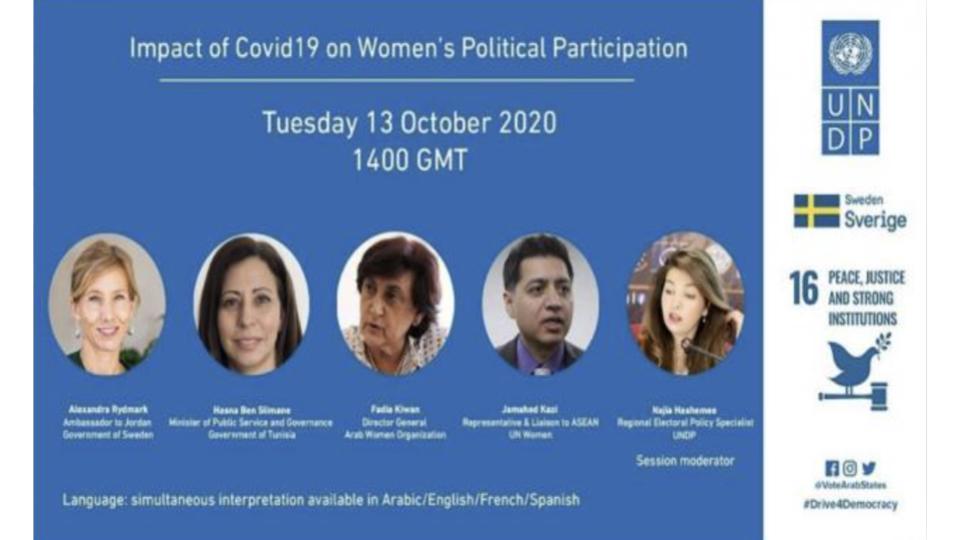
The regional electoral assistance project hold the 9th webinar about the impact of Covid-19 on women’s political participation.
While there have been important advances in women’s leadership in politics, as of November 1 2017, women make up only 7.2% of Heads of State and 6.2% Heads of Government. Data on women representatives in local government, including as mayors, heads of villages and towns, is not well collected and analyzed. The adoption of an SDG indicator on women’s representation in local government is a great step forward in tracking progress on gender balance, allowing for the systematic collection and analysis of data on women in local government. Women’s access to and continued role in leadership positions is challenged by a range of barriers, including discriminatory laws and practices, as well as social norms that prescribe traditional roles and attitudes towards women’s participation in leadership and decision-making roles. Proactive gender-equality policies within political parties and local government structures, including quotas and special temporary measures, gender-sensitive approaches to electoral processes, support networks, mentoring, training, and engagement of male champions, can all help promote women’s role in political leadership.
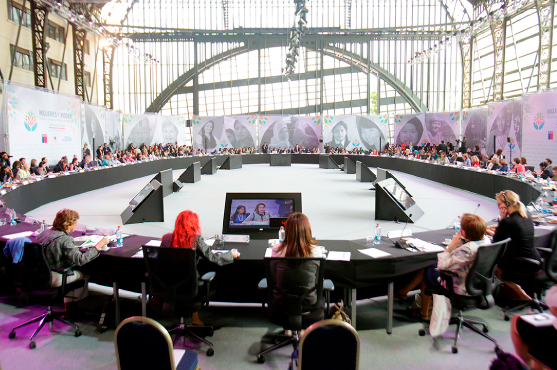

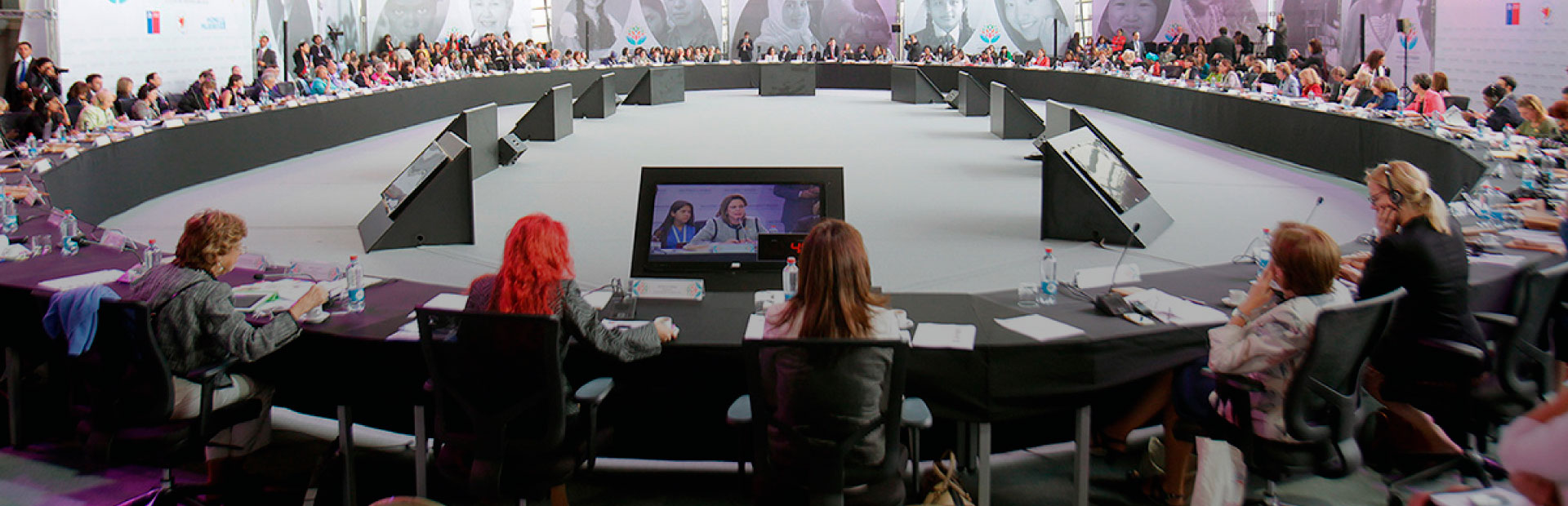
The regional electoral assistance project hold the 9th webinar about the impact of Covid-19 on women’s political participation.

This guide is designed to increase the understanding of the legal obligations of countries in the West and Central Africa (WCA) region to achieve gender equality in decision-making.

The pantheon of autocratic leaders includes a great many sexists, from Napoléon Bonaparte, who decriminalized the murder of unfaithful wives, to Benito Mussolini, who claimed that women “never created anything.” And while the twentieth century saw improvements in wome
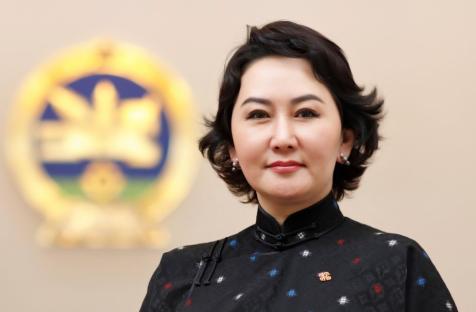
The achievement is part of a long trek toward gender equality in Mongolia’s foreign policy.
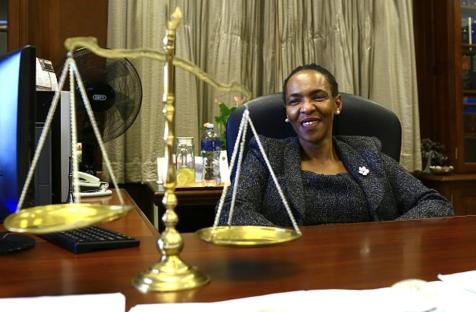
Mandisa Maya, Judge President of South Africa’s Supreme Court of Appeal, was recently recommended by the

Fawcett's Sex and Power 2022 Index is a biennial report which charts the progress towards equal representation for women in top jobs across the UK.

Very little research has considered how media discrimination could impact men and women’s political ambition.

Although a voluminous literature has studied the substantive representation of women, these studies have largely been confined to advanced democracies.

In times of crisis, people are more likely to appoint women and people of colour to be leaders. But this puts crisis leaders in a very precarious position.