June 19, 2017
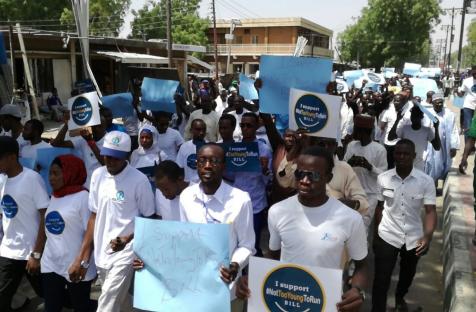
"We are not too young to run": Youth in Nigeria march to support bill
Despite comprising almost half of t
While young people play central and catalyzing roles in movements for democracy around the world, they are less engaged than older generations in voting and party activism. As of 2016 people between the ages of 20 and 44 make up 57% of the world’s voting age population but only 26% of the world’s Members of Parliament (MPs). Young people under 30 only represent 1.9% of the world’s MP’s and more than 80% of the world’s upper houses of Parliament have no MPs aged under 30. While male MPs outnumber female MPs in every age category, gender imbalance is less pronounced among younger MPs around the world. This suggests that young men and women may be more likely to make way for new faces and voices to be represented in decision-making (Inter-parliamentary Union Youth Participation in National Parliaments, 2016). Strategies that may promote the engagement of youth in political processes include: youth quotas; legal reforms to align the voting age with the minimum age for elected officials; proportional representation electoral systems; inclusive parliaments and local governance; removal of barriers for youth electoral participation; outreach and recruitment of students by political parties; and targeted outreach to youth political candidates.

Despite comprising almost half of t
Approximately 60 percent of Guinea’
International IDEA’s Youth Democracy Academy is designed to ensure that young women and men, too often marginalized from politica
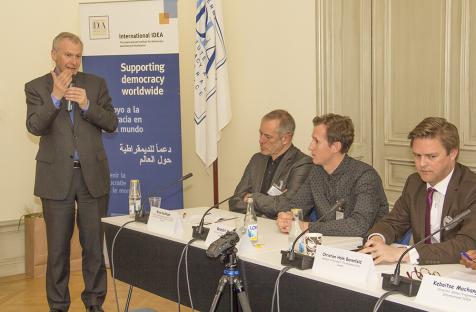
Do new generations of citizens
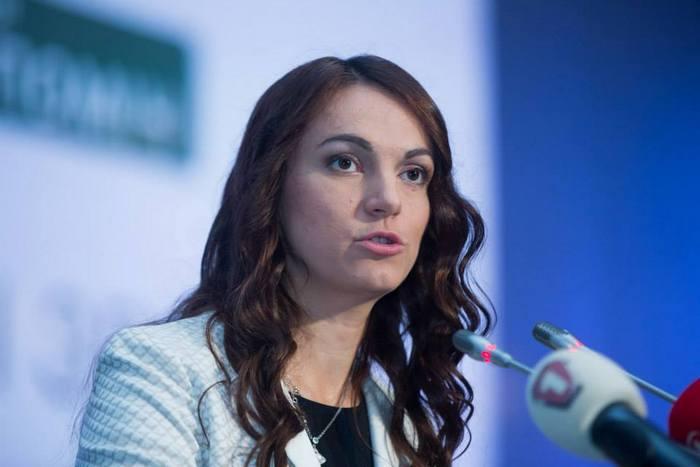

The Research and Advocacy Unit (RAU
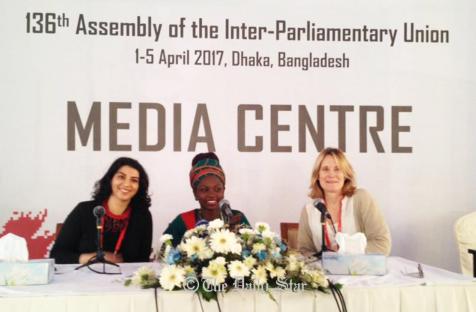
Only 1.9 per cent of lawmakers are
Young people are often excluded or overlooked as political candidates. Politics is typically regarded as a space for politically experienced men, and while women are often disadvantaged in accumulating experience to run for office, young people are systematically marginalized because of their young age, limited opportunities, and projected lack of experience. As the increased political participation of women benefits society as a whole, the presence of young people in decision-making positions benefits all citizens and not just youth.
Young people are often excluded or overlooked as political candidates. Politics is typically regarded as a space for politically experienced men, and while women are often disadvantaged in accumulating experience to run for office, young people are systematically marginalized because of their young age, limited opportunities, and projected lack of experience. As the increased political participation of women benefits society as a whole, the presence of young people in decision-making positions benefits all citizens and not just youth.