The International Federation Of Women In Legal Careers
The International Federation of Women in Legal Careers fights against the eradication of all forms of discrimination against women and promotes their human rights.
Advocacy and development are activities that represent and promote the needs of specific groups in political and social arenas. One such group is women, who can collectively pressure their leaders for legislative reforms to protect and promote women’s rights and concerns. It is the goal of advocacy groups and lobbyists to ensure that both the public and politicians understand and support their cause, so that it gains strength and credibility. Securing rights and gains for women requires coalition-building, funding, civic education, awareness-raising and individuals willing to lead the way.
While the goals of advocacy and development are similar, the processes are distinctly different. Advocacy involves gaining and exercising power to influence a political action. Employing methods such as demonstrations, public campaigns and civic education, advocacy can be the primary mission of international agencies and civil society organizations seeking to influence global and national decision makers. Women worldwide frequently organize themselves for advocacy purposes, drawing on their collective power to affect legislation, official policies and governmental programs. Lobbying, however, refers to influencing the government and its leaders. Development attempt to sway policy makers and legislators to address specific issues, often by introducing or revising legislation and policy. Development activities may include private meetings with decision makers, public campaigns and demonstrations.
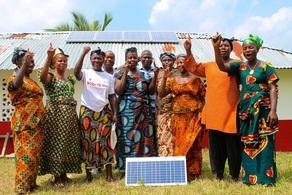
The International Federation of Women in Legal Careers fights against the eradication of all forms of discrimination against women and promotes their human rights.
This paper discusses the extent to which existing indicators of governance are gender-sensitive and pro-poor and how governance indicators could be made more gender-sensitive and pro-poor.
This guidebook describes the roles and responsibilities of members of parliament highlighting their roles as legislators, parliamentary committee members, and public servants. It includes examples and references to the practices used in the Republic of Macedonia.
This report gives an overview of the strategies applied in Bulgaria to increase women’s political participation and representation.
This fact sheet provides evidence to support that when there is a critical mass (at least 30%) of women in policy-making bodies, women’s issues are not only prioritized in the policy-agenda, but they are also more likely to be acted upon by policy-makers.
This research paper focuses on gender and social capital in northern Nigeria and attempts to fill some of the knowledge gaps withing existing gender relations. It discusses the impact of gender roles on collective action and access to resources.
This guide highlights four reforms often tied to World Bank and IMF policy-based loans that intensify gender inequality and undermine the ability of women and girls to break out of poverty. It also provides a number of resources, relevant topics and ideas for further action.
This report aims to give as comprehensive a picture as possible of positive action, to explain how it interrelates with the principle of non-discrimination and how it interacts with other tools, such as gender mainstreaming.
This report has three main objectives: to show the strong linkages between gender equality and the Millennium Development Goals (MDGs); to show that working for gender equality offers a compelling, win-win approach for policy makers and planners towards attaining and implementing the MDGs; and to