Practical Women's Leadership Power Tools to Advance Your Career
Are you considering your next career move? Want to advance faster in leadership or compensation? Puzzled by power politics in the office?
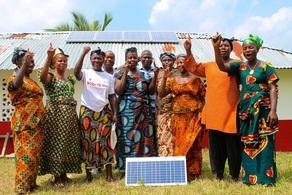
Advocacy and development are activities that represent and promote the needs of specific groups in political and social arenas. One such group is women, who can collectively pressure their leaders for legislative reforms to protect and promote women’s rights and concerns. It is the goal of advocacy groups and lobbyists to ensure that both the public and politicians understand and support their cause, so that it gains strength and credibility. Securing rights and gains for women requires coalition-building, funding, civic education, awareness-raising and individuals willing to lead the way.
While the goals of advocacy and development are similar, the processes are distinctly different. Advocacy involves gaining and exercising power to influence a political action. Employing methods such as demonstrations, public campaigns and civic education, advocacy can be the primary mission of international agencies and civil society organizations seeking to influence global and national decision makers. Women worldwide frequently organize themselves for advocacy purposes, drawing on their collective power to affect legislation, official policies and governmental programs. Lobbying, however, refers to influencing the government and its leaders. Development attempt to sway policy makers and legislators to address specific issues, often by introducing or revising legislation and policy. Development activities may include private meetings with decision makers, public campaigns and demonstrations.
Are you considering your next career move? Want to advance faster in leadership or compensation? Puzzled by power politics in the office?
Are you considering your next career move? Want to advance faster in leadership or compensation? Puzzled by power politics in the office? Accelerate your career and uptick your leadership skills with this innovative, 9 practical women’s leadership “Power Tools” program entirely online.
Well known for its highly articulate and influential women, Pakistan is also notorious for the severe restrictions placed on women’s personal and political liberties.
On the occasion of the International Day of Action for Women's Health, European public health, health promotion and disease prevention, health professionals and women issues non-governmental organisations are calling for the newly elected European Parliament (EP), its Committees and political par
The moment there was an inkling that Dyana Sofya would be DAP’s candidate for the Teluk Intan Parliamentary seat, a picture purportedly of her (it wasn’t) in a bikini was circulated on the internet.
Women were angered by the percentage allocated to their representation in the future parliament according to the new parliament law, the National Council for Women said on Thursday.
A committee formed by a presidential decree to draft this new law announced it yesterday.
You will find here the list of MEPs who have already endorsed EWL Manifesto. Let’s get much more until the European elections! Thanks for your support!
There is a need for women to organise themselves as a pressure group to be able to carve a niche in the political sphere, three Delhi-based women journalists said Saturday.
There's a long-held assumption that women are more likely than men to collaborate. As the number of women in Congress has increased, however, so has the partisanship and gridlock. So does a woman's touch actually help on Capitol Hill?