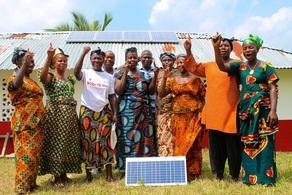
Hillary Clinton’s speech was met with silence from the male-dominated envoys at the African Union as she criticized the continents aging autocrats. The mood changed when the U.S. Secretary of State turned her attention to women.
Advocacy and Lobbying
Advocacy and lobbying are activities that represent and promote the needs of specific groups in political and social arenas. One such group is women, who can collectively pressure their leaders for legislative reforms to protect and promote women’s rights and concerns. It is the goal of advocacy groups and lobbyists to ensure that both the public and politicians understand and support their cause, so that it gains strength and credibility. Securing rights and gains for women requires coalition-building, funding, civic education, awareness-raising and individuals willing to lead the way.
While the goals of advocacy and lobbying are similar, the processes are distinctly different. Advocacy involves gaining and exercising power to influence a political action. Employing methods such as demonstrations, public campaigns and civic education, advocacy can be the primary mission of international agencies and civil society organizations seeking to influence global and national decision makers. Women worldwide frequently organize themselves for advocacy purposes, drawing on their collective power to affect legislation, official policies and governmental programs. Lobbying, however, refers to influencing the government and its leaders. Lobbyists attempt to sway policy makers and legislators to address specific issues, often by introducing or revising legislation and policy. Lobbying activities may include private meetings with decision makers, public campaigns and demonstrations.
Women in minority and indigenous communities are especially vulnerable to wide-ranging forms of violence, abuse and discrimination, according to a new report released Wednesday by Minority Rights Group International (MRG), a human rights group that works on behalf of minorities and indigenous pe
DUBAI: Women are pushing forward on gaining more rights within their respective societies across the Islamic world, professor Amina Jamal of Ryerson University in Canada said at a seminar on Islam.
At the gathering in a hotel on the outskirts of the Malaysian capital, there was talk of canvassing “highly persuadable” voters, campaign budgets and media strategies.
United Nations, New York — Women make up less than 10 percent of world leaders. Globally less than one in five members of parliament is a woman. The 30 percent critical mass mark for women’s representation in parliament has been reached or exceeded in only 28 countries.
Gender equality is shrewd economics as well as a human right, the World Bank has said in a report that showed countries with better opportunities for women and girls can boost productivity and development.
Fair hiring in China. Literacy in Mali. Newsweek’s rankings reveal where women are leaving their mark—and where the gains are slow to come.
Prof. Wangari Mathai passed away on the 25th of September, in Kenya, after a prolonged battle with cancer.
Kenyan Nobel Peace Prize winner Wangari Maathai has died in Nairobi while undergoing cancer treatment at the age of 71.
Pagination
- Previous page
- Page 105
- Next page