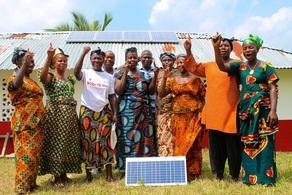
2011 Global Summit of Women
To register for the Summit click here.
To read further please visit the Summit site.
Advocacy and lobbying are activities that represent and promote the needs of specific groups in political and social arenas. One such group is women, who can collectively pressure their leaders for legislative reforms to protect and promote women’s rights and concerns. It is the goal of advocacy groups and lobbyists to ensure that both the public and politicians understand and support their cause, so that it gains strength and credibility. Securing rights and gains for women requires coalition-building, funding, civic education, awareness-raising and individuals willing to lead the way.
While the goals of advocacy and lobbying are similar, the processes are distinctly different. Advocacy involves gaining and exercising power to influence a political action. Employing methods such as demonstrations, public campaigns and civic education, advocacy can be the primary mission of international agencies and civil society organizations seeking to influence global and national decision makers. Women worldwide frequently organize themselves for advocacy purposes, drawing on their collective power to affect legislation, official policies and governmental programs. Lobbying, however, refers to influencing the government and its leaders. Lobbyists attempt to sway policy makers and legislators to address specific issues, often by introducing or revising legislation and policy. Lobbying activities may include private meetings with decision makers, public campaigns and demonstrations.
To register for the Summit click here.
To read further please visit the Summit site.
In Africa, a great majority of the population lives in rural areas and is fully dependent on land and other natural resources for its livelihood: e.g. Niger (83%); Rwanda and Malawi (81%).
TENTATIVEPROGRAM
NOVEMBER 5, 2010, FRIDAY
09:00 - 09:30 Registration
09:30 - 12:00 OPENING CEREMONY AND PROTOCOL SPEECHES
Women’s rights activists, feminists and politicians examined together alternatives and meanings of gender equality politics and produced Conclusions and Recommendations.The general conclusions and
Why Should You Attend?
European Commission has announced the year 2010 as "European Year for Combating Poverty and Social Exclusion" and in this context various activities have been organized in European countries.
Each BGD project includes a workshop to encourage interregional, intercultural, interdisciplinary, ideologically plural and action-oriented discussion of the topic at hand.
The 2010 Women PeaceMakers Conference coincides with a momentous year, marking both the 15th anniversary of the Beijing Declaration and Platform for Action and the 10th anniversary of UNSCR 1325.