Advocacy and Lobbying

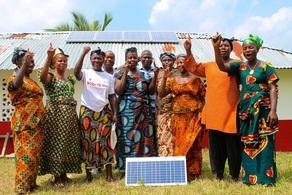
Advocacy and lobbying are activities that represent and promote the needs of specific groups in political and social arenas. One such group is women, who can collectively pressure their leaders for legislative reforms to protect and promote women’s rights and concerns. It is the goal of advocacy groups and lobbyists to ensure that both the public and politicians understand and support their cause, so that it gains strength and credibility. Securing rights and gains for women requires coalition-building, funding, civic education, awareness-raising and individuals willing to lead the way.

While the goals of advocacy and lobbying are similar, the processes are distinctly different. Advocacy involves gaining and exercising power to influence a political action. Employing methods such as demonstrations, public campaigns and civic education, advocacy can be the primary mission of international agencies and civil society organizations seeking to influence global and national decision makers. Women worldwide frequently organize themselves for advocacy purposes, drawing on their collective power to affect legislation, official policies and governmental programs. Lobbying, however, refers to influencing the government and its leaders. Lobbyists attempt to sway policy makers and legislators to address specific issues, often by introducing or revising legislation and policy. Lobbying activities may include private meetings with decision makers, public campaigns and demonstrations.

March 28, 2014
Afghanistan's 69 women legislators reflect changing times, fight for rights

When they did venture beyond their four walls, they wafted through crowded markets covered from head to toe in the all-encompassing burqa.

March 28, 2014
We Need an Act of Congress to Get More Women In Congress, USA

One of the big headlines for the 2012 elections was the historic number of women elected to state and national offices. New Hampshire became the first state to elect an all women congressional delegation and a woman governor. The U.S.

March 28, 2014
NWCI puts 6 important questions to local and EP election candidates, Ireland

As the May 23 local and European elections draw nearer, the National Woman's Council of Ireland (NWCI) has formulated six key questions to tease out the ways in which potential candidates are committed to promoting gender equality in political arenas and across all aspects of Irish life.

Equality in Politics: An Overview of Key Findings

Back
March 17, 2014

Equality in Politics: An Overview of Key Findings

6 key findings on obstacles to women in politics based on a an Inter-parlimentary Union survey of Women and Men in Parliaments

6 key findings on obstacles to women in politics based on a an Inter-parlimentary Union survey of Women and Men in Parliaments

February 18, 2014
Women of Latin America build bridges, changing status quo in politics

In Honduras and El Salvador, a spotlight on efforts towards addressing electoral challenges through trainings for candidates. 

Poised to Run: Women’s Pathways to the State Legislatures

Back
February 12, 2014

Poised to Run: Women’s Pathways to the State Legislatures

Women legislators are more likely to say that they decided to seek elective office after receiving the suggestion to run, whereas men are more likely to say that the decision to run was entirely their idea.

Women legislators are more likely to say that they decided to seek elective office after receiving the suggestion to run, whereas men are more likely to say that the decision to run was entirely their idea.

February 12, 2014
Solomon MP calls for reserved seats for women in national parliament

Solomon Islands Member of Parliament Hon. Milner Tozaka says he supports reserved seats for women in the national parliament and calls on the government to legislate the proposal before parliament dissolves in September 2014.

February 11, 2014
In Nepal, Women Fight to Maintain Seats in the Constituent Assembly

Nepali women had much to be proud of as 172 of them were seated in the country’s newest Constituent Assembly on Jan. 22.