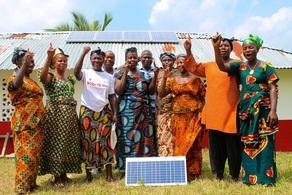
Advocacy and Lobbying

Advocacy and lobbying are activities that represent and promote the needs of specific groups in political and social arenas. One such group is women, who can collectively pressure their leaders for legislative reforms to protect and promote women’s rights and concerns. It is the goal of advocacy groups and lobbyists to ensure that both the public and politicians understand and support their cause, so that it gains strength and credibility. Securing rights and gains for women requires coalition-building, funding, civic education, awareness-raising and individuals willing to lead the way.

While the goals of advocacy and lobbying are similar, the processes are distinctly different. Advocacy involves gaining and exercising power to influence a political action. Employing methods such as demonstrations, public campaigns and civic education, advocacy can be the primary mission of international agencies and civil society organizations seeking to influence global and national decision makers. Women worldwide frequently organize themselves for advocacy purposes, drawing on their collective power to affect legislation, official policies and governmental programs. Lobbying, however, refers to influencing the government and its leaders. Lobbyists attempt to sway policy makers and legislators to address specific issues, often by introducing or revising legislation and policy. Lobbying activities may include private meetings with decision makers, public campaigns and demonstrations.

August 28, 2013
Initiative Works to Enhance Women’s Political Leadership in Mexico

This year marks Mexico’s 60th anniversary of women’s suffrage, and though the country has made progress in passing reforms to increase women’s political participation, women are still not well-represented in decision-making bodies.

August 26, 2013
Solomon Islands election candidate says women want change

A Solomon Islands politician says women in her country are fed up with not benefitting from any of the money that passes through the hands of her male counterparts.

August 24, 2013
Women lawmakers advocate women empowerment, Bangladesh

To eliminate gender discrimination, the political parties should ensure 33% of the positions allotted to women in their party hierarchical structure by 2015, and include this in their election manifesto ahead of the 2014 general elections.

August 20, 2013
Sierra Leone: SLSAV Promotes Women On Leadership

In a bid to promote women in leadership positions, the Sierra Leone Social Aid Volunteers (SLSAV) has concluded a one-day confab on women's participation in leadership and decision-making at local governance level.

August 20, 2013
Political Parties and PACs Key to Recruiting More Women for Congress, USA

Women aren't running for office because barriers to entry too high

August 19, 2013
Women use Twitter to raise issues, Saudi Arabia

Thousands of Saudi women have been using social media, especially Twitter, to air their views and campaign for their rights, a senior Saudi journalist said, adding that their tweets were instrumental in mobilizing public and official support for their causes.

August 16, 2013
Can the GOP Fix Its Woman Problem in Time to Fight Clinton? USA

If you knew nothing else about the Republican Party, two days at the Republican National Committee's Summer Meeting would convince you that it's a party taking its recovery seriously, having bottomed out with embarrassing polling and technological failures in the fall of 2012, along with majo

Equal Participation of Women and Men in Decision-Making Processes, with Particular Emphasis on Political Participation and Leadership

Back
August 15, 2013

Equal Participation of Women and Men in Decision-Making Processes, with Particular Emphasis on Political Participation and Leadership

Report of the Expert Group Meeting held in Addis-Ababa, Ethiopia on 24 – 27 October 2005

Report of the Expert Group Meeting held in Addis-Ababa, Ethiopia on 24 – 27 October 2005

August 15, 2013
Tanzania: New Katiba - Pressing for Gender Equality

MORE than fifty years after independence, Tanzania is embarking on a Constitutional Review process that will transform the way its people relate and live with each other and also the way the country is governed.