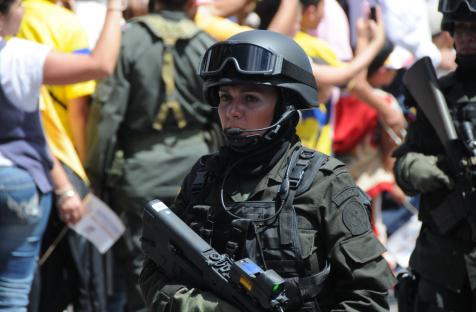
“No Justice? No Peace!” Never has this chant, which I have heard so often at anti-war rallies, felt so real to me as during the last few months observing the ongoing peace negotiations between the Colombian government and the FARC guerrillas.
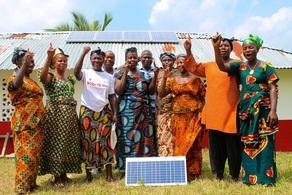
Advocacy and lobbying are activities that represent and promote the needs of specific groups in political and social arenas. One such group is women, who can collectively pressure their leaders for legislative reforms to protect and promote women’s rights and concerns. It is the goal of advocacy groups and lobbyists to ensure that both the public and politicians understand and support their cause, so that it gains strength and credibility. Securing rights and gains for women requires coalition-building, funding, civic education, awareness-raising and individuals willing to lead the way.
While the goals of advocacy and lobbying are similar, the processes are distinctly different. Advocacy involves gaining and exercising power to influence a political action. Employing methods such as demonstrations, public campaigns and civic education, advocacy can be the primary mission of international agencies and civil society organizations seeking to influence global and national decision makers. Women worldwide frequently organize themselves for advocacy purposes, drawing on their collective power to affect legislation, official policies and governmental programs. Lobbying, however, refers to influencing the government and its leaders. Lobbyists attempt to sway policy makers and legislators to address specific issues, often by introducing or revising legislation and policy. Lobbying activities may include private meetings with decision makers, public campaigns and demonstrations.
“No Justice? No Peace!” Never has this chant, which I have heard so often at anti-war rallies, felt so real to me as during the last few months observing the ongoing peace negotiations between the Colombian government and the FARC guerrillas.
As Cambodia's most visible female politician, Mu Sochua is a leader in the fight for democratic reform and women's rights, although both issues are looked at with skepticism in this male-dominated society.
A backlash against women’s rights emerged in post-revolutionary Egypt.
In the two-year cycle&
Civil society organisations are increasingly recognising the need to influence policy and decisionmaking processes more effectively, whether that be to represent the needs of their interest groups, or to ensure that new policies are based on sound research
Before Yemen's unification and the bloody civil war that followed, women in the southern port city of Aden say they were educated professionals with rights not experienced by those in the conservative north.
In the aftermath of the wave of uprisings that took place across the Arab world in 2011, women were placed under the spotlight of post-revolution political discussion.
This research provides a clear road map for women who are running for major statewide office: how to introduce themselves to voters to demonstrate their qualifications; what language contributes to voters believing they are qualified; and how to present themselves in a way that
Marginalized by both a patriarchal society and the narrow confines of Western feminist discourse, Muslim women around the world are developing their own form of activism.