Advocacy and Lobbying

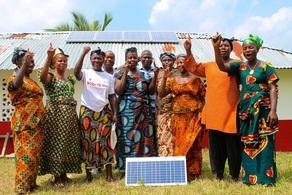
Advocacy and lobbying are activities that represent and promote the needs of specific groups in political and social arenas. One such group is women, who can collectively pressure their leaders for legislative reforms to protect and promote women’s rights and concerns. It is the goal of advocacy groups and lobbyists to ensure that both the public and politicians understand and support their cause, so that it gains strength and credibility. Securing rights and gains for women requires coalition-building, funding, civic education, awareness-raising and individuals willing to lead the way.

While the goals of advocacy and lobbying are similar, the processes are distinctly different. Advocacy involves gaining and exercising power to influence a political action. Employing methods such as demonstrations, public campaigns and civic education, advocacy can be the primary mission of international agencies and civil society organizations seeking to influence global and national decision makers. Women worldwide frequently organize themselves for advocacy purposes, drawing on their collective power to affect legislation, official policies and governmental programs. Lobbying, however, refers to influencing the government and its leaders. Lobbyists attempt to sway policy makers and legislators to address specific issues, often by introducing or revising legislation and policy. Lobbying activities may include private meetings with decision makers, public campaigns and demonstrations.

Stanford Course on Democratic Development

Back
March 20, 2013

Stanford Course on Democratic Development

Democratic Development is intended as a broad, introductory survey of the political, social, cultural, economic, institutional, and international factors that foster or obstruct the development, and consolidation, of democracy.

Democratic Development is intended as a broad, introductory survey of the political, social, cultural, economic, institutional, and international factors that foster or obstruct the development, and consolidation, of democracy.

March 13, 2013
Women’s Security in the Middle East and North Africa

What are the challenges to women’s security in the MENA region?

Women’s Law Association conference focused on increasing women’s political participation (video)

Back
March 12, 2013

Women’s Law Association conference focused on increasing women’s political participation (video)

In an effort to build momentum following the 2012 races, the Women’s Law Association hosted its annual conference on February 8, entitled “19%: When Will Women Have the Floor?” Experts and professionals gathered to discuss how to close the gender gap in politics, and what role lawyers can play
March 11, 2013
Agents of Change: Yousra Fraous, the Arab Institute for Human Rights

Since the revolution of January 2011, IDEA has been following closely the transition to democracy in Tunisia. Over the past two years, the Institute has strengthened its presence on the ground to provide support to the ongoing constitutional process.

Emerging Voices: Young Women in Lebanese Politics

Back
March 5, 2013

Emerging Voices: Young Women in Lebanese Politics

Although Lebanon is known in the Middle East for its relative political openness and for the degree of freedom Lebanese women enjoy, it paradoxically has one of the lowest rates of women’s political engagement in the region.

Although Lebanon is known in the Middle East for its relative political openness and for the degree of freedom Lebanese women enjoy, it paradoxically has one of the lowest rates of women’s political engagement in the region.

February 21, 2013
The century of inclusion and women’s full participation: Kapuscinski lecture by Michelle Bachelet

Michelle Bachelet United Nations Under-Secretary-General and Executive Director of UN Women : “The century of inclusion and women’s full participation”. Dublin, Ireland. 21 February, 2013.

Empowering Women for Stronger Political Parties: A Guidebook to Promote Women's Political Participation

Back
February 20, 2013

Empowering Women for Stronger Political Parties: A Guidebook to Promote Women's Political Participation

This publication, published by UNDP and NDI, identifies targeted interventions for promoting the stronger presence and influence of women in political parties as well as advancing gender equality issues in party policies and platforms.

This publication, published by UNDP and NDI, identifies targeted interventions for promoting the stronger presence and influence of women in political parties as well as advancing gender equality issues in party policies and platforms.

NDI: Women's Political Participation Training Report, Cambodia

Back
February 20, 2013

NDI: Women's Political Participation Training Report, Cambodia

As the 2013 National Assembly elections approach, Cambodia has an opportunity to improve women’s political participation.

As the 2013 National Assembly elections approach, Cambodia has an opportunity to improve women’s political participation.

February 20, 2013
Mauritania: Mauritanian Women Advocate for Rights with Public Petition

Though few Mauritanians are able to have a say in their country’s political life, one group of dedicated women is determined to be heard.