Advocacy and Lobbying

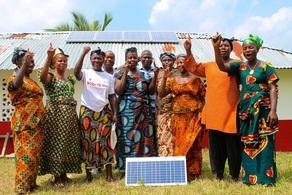
Advocacy and lobbying are activities that represent and promote the needs of specific groups in political and social arenas. One such group is women, who can collectively pressure their leaders for legislative reforms to protect and promote women’s rights and concerns. It is the goal of advocacy groups and lobbyists to ensure that both the public and politicians understand and support their cause, so that it gains strength and credibility. Securing rights and gains for women requires coalition-building, funding, civic education, awareness-raising and individuals willing to lead the way.

While the goals of advocacy and lobbying are similar, the processes are distinctly different. Advocacy involves gaining and exercising power to influence a political action. Employing methods such as demonstrations, public campaigns and civic education, advocacy can be the primary mission of international agencies and civil society organizations seeking to influence global and national decision makers. Women worldwide frequently organize themselves for advocacy purposes, drawing on their collective power to affect legislation, official policies and governmental programs. Lobbying, however, refers to influencing the government and its leaders. Lobbyists attempt to sway policy makers and legislators to address specific issues, often by introducing or revising legislation and policy. Lobbying activities may include private meetings with decision makers, public campaigns and demonstrations.

With an End in Sight: Strategies from the UNIFEM Trust Fund to Eliminate Violence Against Women

Back
February 12, 2007

With an End in Sight: Strategies from the UNIFEM Trust Fund to Eliminate Violence Against Women

This report documents some of the groundbreaking work done by projects supported by the UNIFEM Trust Fund in Support of Actions to Eliminate Violence Against Women.

This report documents some of the groundbreaking work done by projects supported by the UNIFEM Trust Fund in Support of Actions to Eliminate Violence Against Women.

No Safe Place: An Assessment of Violence Against Women in Kosovo

Back
February 12, 2007

No Safe Place: An Assessment of Violence Against Women in Kosovo

This report is the result of a three month project on violence against women in the Kosovar Albanian community. It is intended to assist in the development of policies, programmes and projects to combat violance against women in the region.

This report is the result of a three month project on violence against women in the Kosovar Albanian community. It is intended to assist in the development of policies, programmes and projects to combat violance against women in the region.

Partnerships for Gender Equality: The Role of Multilateral and Bilateral Agencies in Africa

Back
February 12, 2007

Partnerships for Gender Equality: The Role of Multilateral and Bilateral Agencies in Africa

This report documents the work of various multilateral and bilateral donors in Africa to meet the goals set forth during the Beijing +10 Conference.

This report documents the work of various multilateral and bilateral donors in Africa to meet the goals set forth during the Beijing +10 Conference.

Bringing Equality Home: Implementing the Convention on the Elimination of All Forms of Discrimination Against Women (CEDAW)

Back
February 12, 2007

Bringing Equality Home: Implementing the Convention on the Elimination of All Forms of Discrimination Against Women (CEDAW)

This report documents global efforts to embrace the tenets of the Convention on the Elimination of All Forms of Discrimination Against Women (CEDAW).

This report documents global efforts to embrace the tenets of the Convention on the Elimination of All Forms of Discrimination Against Women (CEDAW).

Turning the Tide: CEDAW and the Gender Dimensions of the HIV/AIDS Pandemic

Back
February 12, 2007

Turning the Tide: CEDAW and the Gender Dimensions of the HIV/AIDS Pandemic

This report clarifies the standards set by the Convention on the Elimination of All Forms of Discrimination Against Women (CEDAW) regarding women's rights and the prevention of HIV/AIDS in women.

This report clarifies the standards set by the Convention on the Elimination of All Forms of Discrimination Against Women (CEDAW) regarding women's rights and the prevention of HIV/AIDS in women.

Women and HIV/AIDS: Confronting the Crisis (Executive Summary)

Back
February 12, 2007

Women and HIV/AIDS: Confronting the Crisis (Executive Summary)

This is an executive summary of the "Women and HIV/AIDS: Confronting the Crisis" report, which concludes that women are bearing the brunt of the HIV/AIDS epidemic and that strategies to reverse its effects cannot succeed unless women and girls are empowered to reclaim their rights.

This is an executive summary of the "Women and HIV/AIDS: Confronting the Crisis" report, which concludes that women are bearing the brunt of the HIV/AIDS epidemic and that strategies to reverse its effects cannot succeed unless women and girls are empowered to reclaim their rights.

Progress of South Asian Women 2005

Back
February 12, 2007

Progress of South Asian Women 2005

This report analzyes the status of women in South Asia within the framework of the twelve critical areas of concern identified in the Beijing Platform for Action.

This report analzyes the status of women in South Asia within the framework of the twelve critical areas of concern identified in the Beijing Platform for Action.

Act Now! A Resource Guide for Young Women on HIV/AIDS

Back
February 9, 2007

Act Now! A Resource Guide for Young Women on HIV/AIDS

This guide is based on a three-week on-line discussion on young women and HIV/AIDS, hosted by The Association for Women's Rights in Development and UNIFEM.

This guide is based on a three-week on-line discussion on young women and HIV/AIDS, hosted by The Association for Women's Rights in Development and UNIFEM.

Trafficking in Persons: A Gender and Rights Perspective Briefing Kit

Back
February 9, 2007

Trafficking in Persons: A Gender and Rights Perspective Briefing Kit

This briefing kit provides information on trafficking in persons from a gendered perspective.

This briefing kit provides information on trafficking in persons from a gendered perspective.