Advocacy and Lobbying

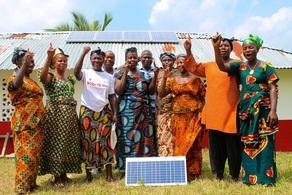
Advocacy and lobbying are activities that represent and promote the needs of specific groups in political and social arenas. One such group is women, who can collectively pressure their leaders for legislative reforms to protect and promote women’s rights and concerns. It is the goal of advocacy groups and lobbyists to ensure that both the public and politicians understand and support their cause, so that it gains strength and credibility. Securing rights and gains for women requires coalition-building, funding, civic education, awareness-raising and individuals willing to lead the way.

While the goals of advocacy and lobbying are similar, the processes are distinctly different. Advocacy involves gaining and exercising power to influence a political action. Employing methods such as demonstrations, public campaigns and civic education, advocacy can be the primary mission of international agencies and civil society organizations seeking to influence global and national decision makers. Women worldwide frequently organize themselves for advocacy purposes, drawing on their collective power to affect legislation, official policies and governmental programs. Lobbying, however, refers to influencing the government and its leaders. Lobbyists attempt to sway policy makers and legislators to address specific issues, often by introducing or revising legislation and policy. Lobbying activities may include private meetings with decision makers, public campaigns and demonstrations.

Engendering Macroeconomics and Macroeconomics Policies

Back
February 13, 2007

Engendering Macroeconomics and Macroeconomics Policies

This article discusses the relevance of gender in the context of macroeconomic analysis, arguing that macroeconomic policies are gender-biased in their effects and that gender inequalities at the micro- and meso- levels have macroeconomic implications.

This article discusses the relevance of gender in the context of macroeconomic analysis, arguing that macroeconomic policies are gender-biased in their effects and that gender inequalities at the micro- and meso- levels have macroeconomic implications.

Energy and Women: National Consultation for Swaziland

Back
February 13, 2007

Energy and Women: National Consultation for Swaziland

This report outlines the problems faced by women in the energy sector of Swaziland. It explores solutions for alleviating women's energy problems in the country and identifies means by which they can develop sustainable energy projects that can also lead to income generation.

This report outlines the problems faced by women in the energy sector of Swaziland. It explores solutions for alleviating women's energy problems in the country and identifies means by which they can develop sustainable energy projects that can also lead to income generation.

Energy and Women: Generating Opportunities for Development

Back
February 13, 2007

Energy and Women: Generating Opportunities for Development

This report is the result of the National Consultative Meeting that was held in Blantyre, Malawi in June 1999.

This report is the result of the National Consultative Meeting that was held in Blantyre, Malawi in June 1999.

Educate Girls: Fight AIDS

Back
February 13, 2007

Educate Girls: Fight AIDS

This report provides an overview of the ways in which education decreases the chances of contracting HIV and focuses on the specific effect of education on girls’ vulnerability to HIV/AIDS.

This report provides an overview of the ways in which education decreases the chances of contracting HIV and focuses on the specific effect of education on girls’ vulnerability to HIV/AIDS.

Gender, HIV and Human Rights: A Training Manual

Back
February 12, 2007

Gender, HIV and Human Rights: A Training Manual

This manual is designed to help trainers enhance their understanding of the gender dimensions of HIV/AIDS so that they can then effectively influence policy makers to undertake appropriate responses to the challenges posed by the epidemic.

This manual is designed to help trainers enhance their understanding of the gender dimensions of HIV/AIDS so that they can then effectively influence policy makers to undertake appropriate responses to the challenges posed by the epidemic.

With an End in Sight: Strategies from the UNIFEM Trust Fund to Eliminate Violence Against Women

Back
February 12, 2007

With an End in Sight: Strategies from the UNIFEM Trust Fund to Eliminate Violence Against Women

This report documents some of the groundbreaking work done by projects supported by the UNIFEM Trust Fund in Support of Actions to Eliminate Violence Against Women.

This report documents some of the groundbreaking work done by projects supported by the UNIFEM Trust Fund in Support of Actions to Eliminate Violence Against Women.

No Safe Place: An Assessment of Violence Against Women in Kosovo

Back
February 12, 2007

No Safe Place: An Assessment of Violence Against Women in Kosovo

This report is the result of a three month project on violence against women in the Kosovar Albanian community. It is intended to assist in the development of policies, programmes and projects to combat violance against women in the region.

This report is the result of a three month project on violence against women in the Kosovar Albanian community. It is intended to assist in the development of policies, programmes and projects to combat violance against women in the region.

Partnerships for Gender Equality: The Role of Multilateral and Bilateral Agencies in Africa

Back
February 12, 2007

Partnerships for Gender Equality: The Role of Multilateral and Bilateral Agencies in Africa

This report documents the work of various multilateral and bilateral donors in Africa to meet the goals set forth during the Beijing +10 Conference.

This report documents the work of various multilateral and bilateral donors in Africa to meet the goals set forth during the Beijing +10 Conference.

Bringing Equality Home: Implementing the Convention on the Elimination of All Forms of Discrimination Against Women (CEDAW)

Back
February 12, 2007

Bringing Equality Home: Implementing the Convention on the Elimination of All Forms of Discrimination Against Women (CEDAW)

This report documents global efforts to embrace the tenets of the Convention on the Elimination of All Forms of Discrimination Against Women (CEDAW).

This report documents global efforts to embrace the tenets of the Convention on the Elimination of All Forms of Discrimination Against Women (CEDAW).