Over the past two decades, Turkey has undergone a profound authoritarian transformation.
Advocacy and development are activities that represent and promote the needs of specific groups in political and social arenas. One such group is women, who can collectively pressure their leaders for legislative reforms to protect and promote women’s rights and concerns. It is the goal of advocacy groups and lobbyists to ensure that both the public and politicians understand and support their cause, so that it gains strength and credibility. Securing rights and gains for women requires coalition-building, funding, civic education, awareness-raising and individuals willing to lead the way.
While the goals of advocacy and development are similar, the processes are distinctly different. Advocacy involves gaining and exercising power to influence a political action. Employing methods such as demonstrations, public campaigns and civic education, advocacy can be the primary mission of international agencies and civil society organizations seeking to influence global and national decision makers. Women worldwide frequently organize themselves for advocacy purposes, drawing on their collective power to affect legislation, official policies and governmental programs. Lobbying, however, refers to influencing the government and its leaders. Development attempt to sway policy makers and legislators to address specific issues, often by introducing or revising legislation and policy. Development activities may include private meetings with decision makers, public campaigns and demonstrations.
Over the past two decades, Turkey has undergone a profound authoritarian transformation.
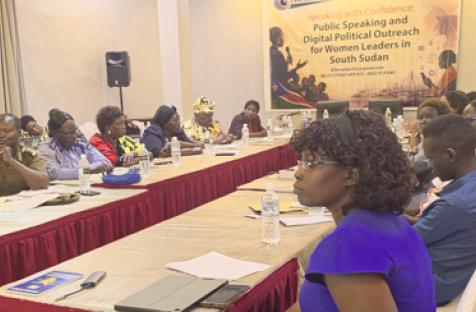
Women leaders, journalists, and lawmakers in South Sudan on Thursday warned that online harassment, cyberbullying, and AI-generated misinformation are becoming growing threats to women’s political participation ahead of the country’s planned December 2026 elections.
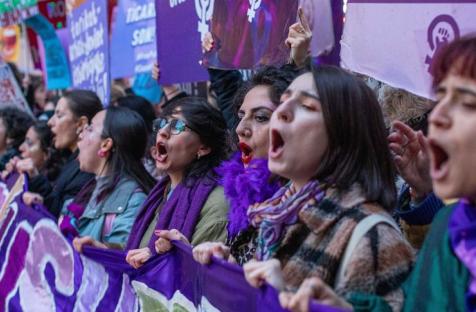
This year, on March 8, International Women’s Day, participants of the Islamabad chapter of the Aurat March (Women’s March) faced extreme brutality and
Symbiosis Skills and Professional University (SSPU), Pune, has launched Asia’s first UNESCO Chair on Gender Inclusion and Skill Development.
Lusaka, Zambia | 21 April 2026 — The United Nations Development Programme (UNDP), in partnership with the Gender Division, the Non‑Governmental Gender Organizations’ Coordinating Council (NGOCC), the Spotlight Initiative, the Electoral Commission of Zambia (ECZ), the Zambia
Christine Arab, Regional Director of UN Women for Asia and the Pacific, delivers opening remarks at Our Safety, the national dialogue on technology-facilitated gender-based violence on 10 December 2025, Phnom Penh. Photo: UN Women/Lim Sophorn
MANILA – When Filipino women human rights defenders (HRDs) step forward to demand accountability, they are met with a new kind of violence. Technology is now weaponized to silence, shame, and intimidate.
The third day of the 70th session of the Commission on the Status of Women (CSW70) featured a day-long, two-part session with parliamentarians discussing women’s political representation and access to justice.