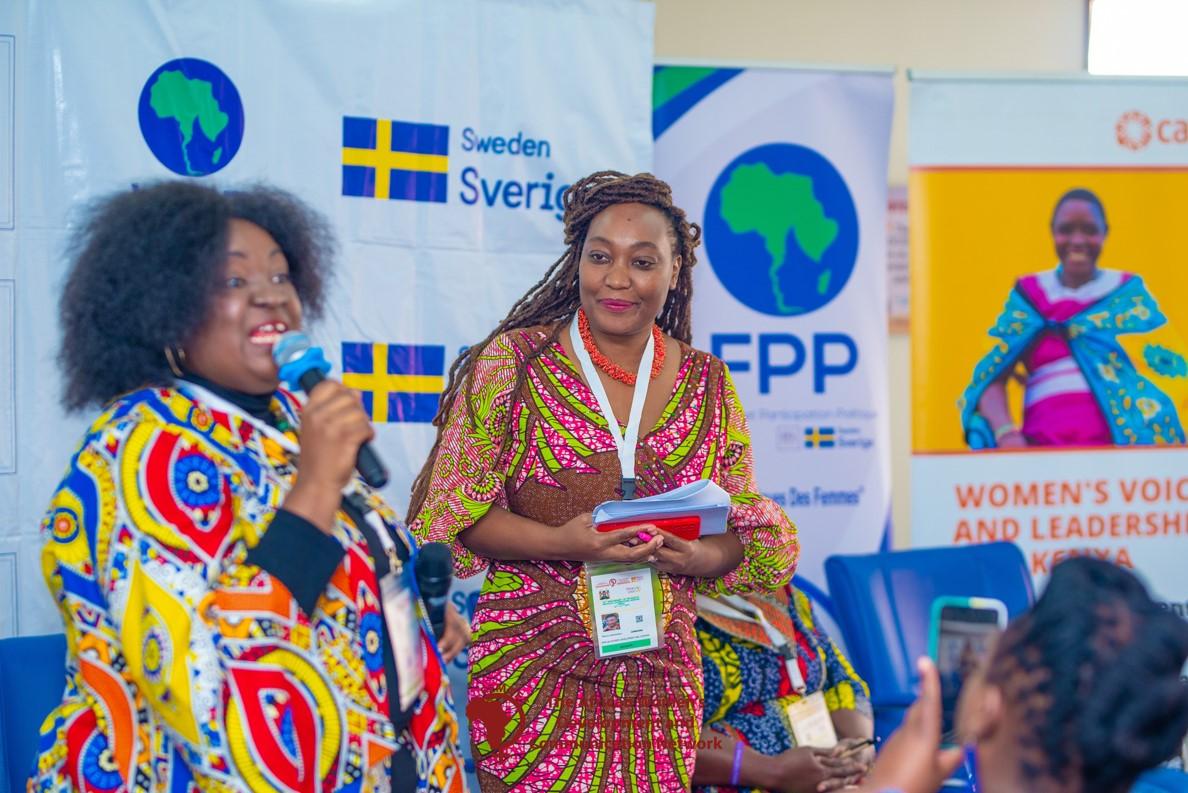
We need more African women in political spaces
Normal
0
-->
Advocacy and lobbying are activities that represent and promote the needs of specific groups in political and social arenas. One such group is women, who can collectively pressure their leaders for legislative reforms to protect and promote women’s rights and concerns. It is the goal of advocacy groups and lobbyists to ensure that both the public and politicians understand and support their cause, so that it gains strength and credibility. Securing rights and gains for women requires coalition-building, funding, civic education, awareness-raising and individuals willing to lead the way.
While the goals of advocacy and lobbying are similar, the processes are distinctly different. Advocacy involves gaining and exercising power to influence a political action. Employing methods such as demonstrations, public campaigns and civic education, advocacy can be the primary mission of international agencies and civil society organizations seeking to influence global and national decision makers. Women worldwide frequently organize themselves for advocacy purposes, drawing on their collective power to affect legislation, official policies and governmental programs. Lobbying, however, refers to influencing the government and its leaders. Lobbyists attempt to sway policy makers and legislators to address specific issues, often by introducing or revising legislation and policy. Lobbying activities may include private meetings with decision makers, public campaigns and demonstrations.

Normal
0
-->
Normal
0
-->
Normal
0
-->
Normal
0
false
-->

Normal
0
false
-->
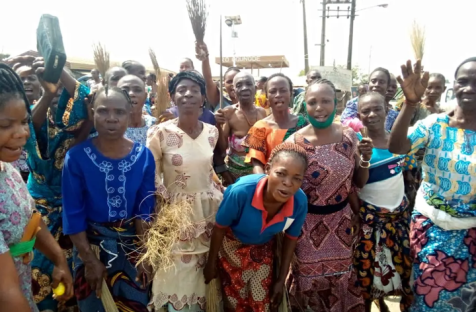
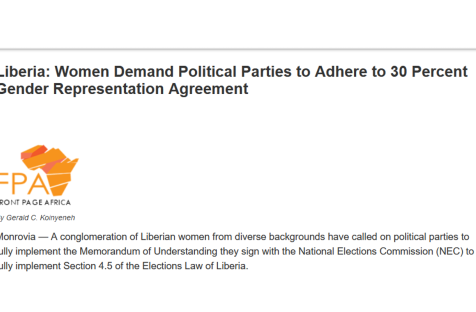
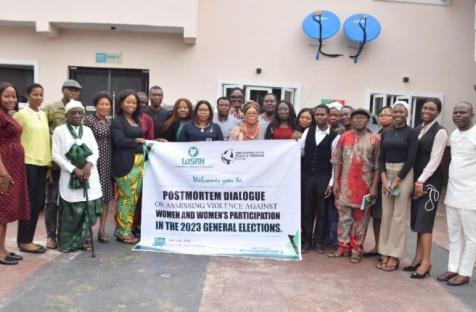
A conglomeration of Liberian women from diverse backgrounds have called on political parties to fully implement the Memorandum of Understanding they sign with the National Elections Commission (NEC) to fully implement Section 4.5 of the Elections Law of Liberia.
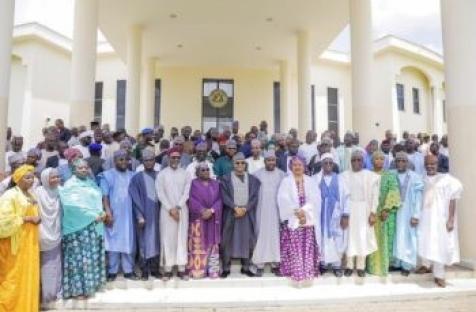
As Nigerians anxiously await President Bola Ahmed Tinubu’s ministerial list, there is an added dimension to the discourse— the demand for gender parity in ministerial appointments.

As Nigerians anxiously await President Bola Ahmed Tinubu’s ministerial list, there is an added dimension to the discourse— the demand for gender parity in ministerial appointments.

Normal
0
-->