Advocacy and Lobbying
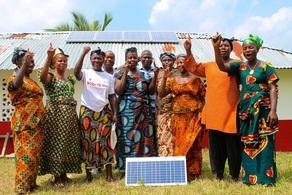
Advocacy and lobbying are activities that represent and promote the needs of specific groups in political and social arenas. One such group is women, who can collectively pressure their leaders for legislative reforms to protect and promote women’s rights and concerns. It is the goal of advocacy groups and lobbyists to ensure that both the public and politicians understand and support their cause, so that it gains strength and credibility. Securing rights and gains for women requires coalition-building, funding, civic education, awareness-raising and individuals willing to lead the way.
While the goals of advocacy and lobbying are similar, the processes are distinctly different. Advocacy involves gaining and exercising power to influence a political action. Employing methods such as demonstrations, public campaigns and civic education, advocacy can be the primary mission of international agencies and civil society organizations seeking to influence global and national decision makers. Women worldwide frequently organize themselves for advocacy purposes, drawing on their collective power to affect legislation, official policies and governmental programs. Lobbying, however, refers to influencing the government and its leaders. Lobbyists attempt to sway policy makers and legislators to address specific issues, often by introducing or revising legislation and policy. Lobbying activities may include private meetings with decision makers, public campaigns and demonstrations.
Interviews
Videos
Tackling violence against women in politics in Lebanon
Violence against women in politics is a serious violation of human rights and an obstacle to gender equality. Watch this video by UN Women Lebanon.
e-Discussions
Women in Public Administration
“Increasing the proportion of women in public institutions makes them more representative, increases innovation, improves decision-making and benefits whole societies” - António Guterres, United Nations Secretary-General, Message on International Women’s Day 2017
Johannesburg, South Africa (ADV) – A Malawian NGO Gender Coordination Network (NGO-GCN) has expressed concern on political parties that snubbed women in the internal election processes with many female parliamentary candidates forced to stand as inde
A local pro-democracy and women’s rights advocacy group working in Southeastern Liberia, the National Institute for Public Opinion (NIPO), has concluded a one-day dialogue on women’s political participation in Sinoe County.
Open-letter signatory Susana Malcorra says women ‘need to be very prepared to fight back’ amid global political shift.
ZIMBABWE’S first ever women’s political leadership school was on Friday launched in Masvingo under the name, Women’s Academy for Leadership and Political Excellence (Walpe).
51 women from different political parties and civil society organizations in Adana, southern Turkey, made a joint statement calling for more gender equality in politics at workshop organized by UN Women.
Gender Justice & The Law: Assessment of laws affecting gender equality in the Arab States region
Conducted by UNDP, UN Women, UNFPA, and ESCWA, this study on Gender Justice & the Law in the Arab States Region provides a comprehensive assessment of laws and policies affecting gender equality and protection against gender-based violence in Ara
Pagination
- Previous page
- Page 58
- Next page