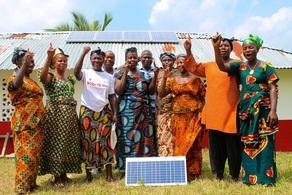
Photo-I ama Huam Society
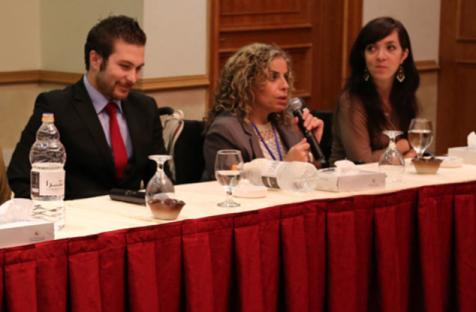
Reinforcing the political participation of women with disabilities is the goal of a new initiative launched by the "I am a Human Society", which advocates for the rights of people with disabilities.
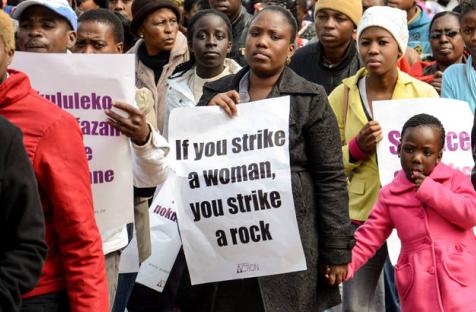
Advocacy and lobbying are activities that represent and promote the needs of specific groups in political and social arenas. One such group is women, who can collectively pressure their leaders for legislative reforms to protect and promote women’s rights and concerns. It is the goal of advocacy groups and lobbyists to ensure that both the public and politicians understand and support their cause, so that it gains strength and credibility. Securing rights and gains for women requires coalition-building, funding, civic education, awareness-raising and individuals willing to lead the way.
While the goals of advocacy and lobbying are similar, the processes are distinctly different. Advocacy involves gaining and exercising power to influence a political action. Employing methods such as demonstrations, public campaigns and civic education, advocacy can be the primary mission of international agencies and civil society organizations seeking to influence global and national decision makers. Women worldwide frequently organize themselves for advocacy purposes, drawing on their collective power to affect legislation, official policies and governmental programs. Lobbying, however, refers to influencing the government and its leaders. Lobbyists attempt to sway policy makers and legislators to address specific issues, often by introducing or revising legislation and policy. Lobbying activities may include private meetings with decision makers, public campaigns and demonstrations.
Photo-I ama Huam Society
Reinforcing the political participation of women with disabilities is the goal of a new initiative launched by the "I am a Human Society", which advocates for the rights of people with disabilities.
Prepared and presented by Basma Soudani Belhadj (President and founder of League of Tunisian Women Voters LET) and Najla Abbes (board member and co-founder of LET): An overview of women's political participation after the 2011 revolution in Tunisia.
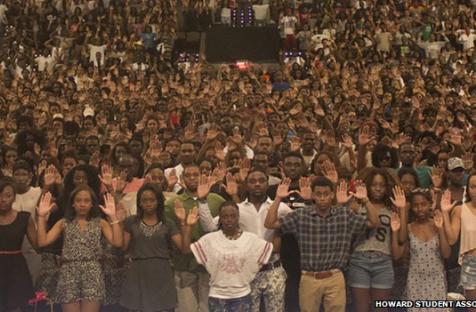
Photo-Ikenna Ikeotuonye and the Howard University Student Association.
All too often, we measure our progress in the process of gender empowerment by counting the number of woman politicians in Parliament and Cabinet. There is also now a new dynamic in ANC politics with talk of the prospect of a woman leading the organisation and the country next.
The Strasbourg World Forum for Democracy is an annual gathering of leaders, opinion-makers, civil society activists, representatives of business, academia, media and professional groups to de
The Foundation for Security and Development in Africa (FOSDA), on Thursday urged more women to contest the forthcoming district assemblies’ elections to enable them to participate actively in policy formulation and decision-making processes.
Women should not laugh out loud in public, Deputy Prime Minister Bülent Arınç has said while complaining about “moral corruption” in Turkey.
The women in the airy, well-lit room could be women anywhere talking of things that women often talk about. An adult son who won’t contribute to the household expenses. A daughter who is finding it difficult to adjust to married life. A husband who threatens to get a second wife.
President Barack Obama criticized gender oppression in Africa that he said is "crippling" development in some countries, speaking out publicly Monday for the first time against female genital mutilation while encouraging young leaders from the continent to empower women.