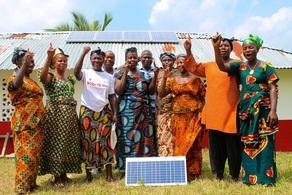
The United Nations Economic and Social Council (ECOSOC) has kick-started Beijing+20, a process to assess how far Member States and other stakeholders have come in implementing the commitments made at the Fourth World Conference on Women in Beijing, China, in 1995.
Advocacy and Lobbying
Advocacy and lobbying are activities that represent and promote the needs of specific groups in political and social arenas. One such group is women, who can collectively pressure their leaders for legislative reforms to protect and promote women’s rights and concerns. It is the goal of advocacy groups and lobbyists to ensure that both the public and politicians understand and support their cause, so that it gains strength and credibility. Securing rights and gains for women requires coalition-building, funding, civic education, awareness-raising and individuals willing to lead the way.
While the goals of advocacy and lobbying are similar, the processes are distinctly different. Advocacy involves gaining and exercising power to influence a political action. Employing methods such as demonstrations, public campaigns and civic education, advocacy can be the primary mission of international agencies and civil society organizations seeking to influence global and national decision makers. Women worldwide frequently organize themselves for advocacy purposes, drawing on their collective power to affect legislation, official policies and governmental programs. Lobbying, however, refers to influencing the government and its leaders. Lobbyists attempt to sway policy makers and legislators to address specific issues, often by introducing or revising legislation and policy. Lobbying activities may include private meetings with decision makers, public campaigns and demonstrations.
Norway's strategic plan 2011-13: Women, Peace and Security
Do politics matter? Women in Swedish local elected assemblies 1970-2010 and gender equality in outcomes
Serbia has made "certain progress", officials concluded at the session of the UN Committee on the Elimination of Discrimination against Women.
Political parties in the country have been asked to ensure that at least 30 per cent of all elected positions at the districts, regional and national levels are occupied by women.
A report claims women are less interested in current affairs. Maybe that's because of the level of discussion. Why are so many women so detached from politics?
A new study disputes the claim that it harms female politicians when the media discuss their appearance.
In one episode of the Nigerian radio drama Dukan Karshe, a young man and woman decide to run for their local council to correct injustices, including government funds being diverted from schools and hospitals to line the pockets of local politicians.
Event
Advocacy 101 - Online Course
Pagination
- Previous page
- Page 91
- Next page