Gender Equality

USA: Why Black women candidates had mixed results in the midterm elections

Back
December 1, 2022

USA: Why Black women candidates had mixed results in the midterm elections

A record number of Black women ran for office this year for U.S. House, Senate and governor. And while some made history with their wins, Black women are still underrepresented in public office.
A record number of Black women ran for office this year for U.S. House, Senate and governor. And while some made history with their wins, Black women are still underrepresented in public office.

Photo source: www.canva.com
December 1, 2022
Between sexual objectification and death threats: Electoral officials all over the world face unprecedented levels of disinformation, aggression and harassment

Recent media reports highlighted the worrying level of online harassment against poll workers around the 2022 United States mid-term elections. Ongoing work by International IDEA confirms that this phenomenon is not limited to the US.

Nigeria: Impact of women in politics on development

Back
November 30, 2022

Nigeria: Impact of women in politics on development

Ugo Aliogo examines the prospects of women in 2023 general election, judging from the low representation of women in the political space and the impact on development

Ugo Aliogo examines the prospects of women in 2023 general election, judging from the low representation of women in the political space and the impact on development

Towards improved measures of gender inequality: An evaluation of the United Nations Development Programme’s Gender Inequality Index and a proposal

Back
November 29, 2022

Towards improved measures of gender inequality: An evaluation of the United Nations Development Programme’s Gender Inequality Index and a proposal

This paper proposes replacing the United Nations Development Programme’s (UNDP) Gender Inequality Index with two new gender indexes: the Global Gender Parity Index (GGPI) and the Women’s Empowerment Index (WEI).

This paper proposes replacing the United Nations Development Programme’s (UNDP) Gender Inequality Index with two new gender indexes: the Global Gender Parity Index (GGPI) and the Women’s Empowerment Index (WEI).

November 28, 2022
Nigeria: NGO laments inadequate publicity for women politicians, others

The CEO Women Radio, a non-governmental organization, Toun Okewale Sonaiya, has lamented that female politicians and leaders are not given the adequate media coverage as their male counterparts.

November 28, 2022
Women leaders present a gender-responsive constitutional vision to representatives of the international community

Forty women from civil society organizations, women’s groups, political parties, armed movements, and academia came together over two weeks and produced a joint gender-responsive constitutional vision in a series of workshops organized by UNITAMS in close collaboratio

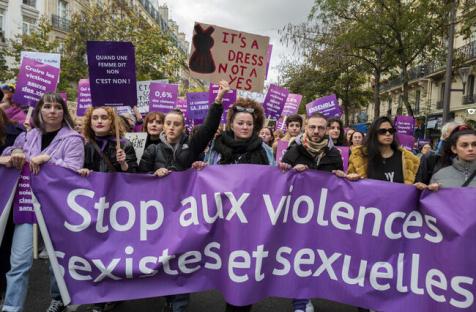
Rally in Paris, France © SERGE TENANI / HANS LUCAS / HANS LUCAS VIA AFP
November 25, 2022
Violence against women parliamentarians: Causes, effects, solutions

Women account for just over 26% of parliamentarians worldwide according to the IPU’s latest figures.

Voices of women and girls essential to fight for human rights

Back
November 25, 2022

Voices of women and girls essential to fight for human rights

“Around the world, we see stigmatization, harassment and outright attacks used to silence and discredit women who are outspoken as leaders, community workers, human rights defenders and politicians,” said Peggy Hicks, Director of the Thematic Engagement, Special Proce

“Around the world, we see stigmatization, harassment and outright attacks used to silence and discredit women who are outspoken as leaders, community workers, human rights defenders and politicians,” said Peggy Hicks, Director of the Thematic Engagement, Special Proce

The blame game: Analyzing gender bias in Danish local elections

Back
November 25, 2022

The blame game: Analyzing gender bias in Danish local elections

Diagnosing women’s under-representation in electoral politics often involves a “blame game,” seeking to identify the primary factor responsible for depressing the share of women among candidates as well as elected officials.

Diagnosing women’s under-representation in electoral politics often involves a “blame game,” seeking to identify the primary factor responsible for depressing the share of women among candidates as well as elected officials.