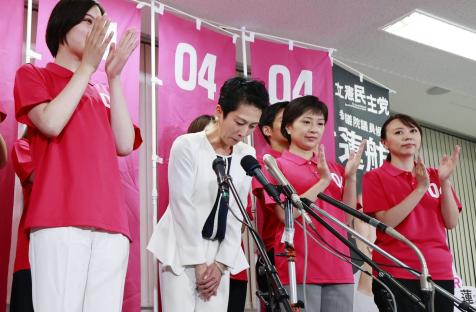
TOKYO - A record number of both women and LGBTQ candidates are campaigning to win over voters in the House of Councillors election on Sunday and potentially bring change to Japan's male-dominated political landscape.
Democracy and the equal participation of men and women in the political arena are closely intertwined. No parliament or any decision-making body can claim to be representative without the participation of both men and women. As stated in the Universal Declaration on Democracy adopted by the Inter-Parliamentary Union’s Member Parliaments in 1997, "The achievement of democracy presupposes a genuine partnership between men and women in the conduct of the affairs of society in which they work in equality and complementarity, drawing mutual enrichment from their differences."
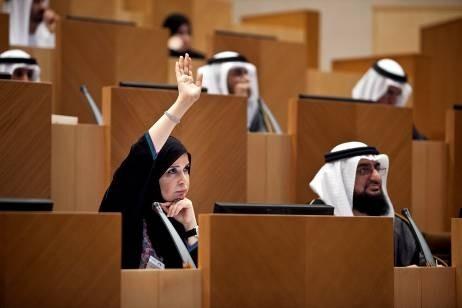
Recent years have seen a steady increase in the number of women in parliament, though the world average of less than 22 percent remains far from the goal of parity between women and men. The election of women to the highest positions of state and government in several countries has also contributed to the changing face of politics.
While the road to election is a difficult one, the challenges for women do not stop there. Once women enter parliament or other bodies, they are faced with many new challenges. Parliament is traditionally a male-oriented domain where the rules and practices have been written by men. It is, therefore, an ongoing challenge to transform parliament into a gender-sensitive environment, to ensure that actions are gender-sensitive and to guarantee that gender is mainstreamed throughout the legislature.
TOKYO - A record number of both women and LGBTQ candidates are campaigning to win over voters in the House of Councillors election on Sunday and potentially bring change to Japan's male-dominated political landscape.
It's been four years since the gender parity law was passed in Japan, with an aim of fielding an equal number of female and male candidates in elections. Still, the male-dominated political environment has not changed.
On the eve of the International Day of Parliamentarism and the IPU’s 133rd anniversary on 30 June, a snapshot of the state of parliaments and parliamentarians offers mixed results.
During the 2020 caucus cycle, I heard it a lot, the refrain of the cautious Democratic voter. I want to vote for her, but I don’t think she can win. It wasn’t, people reasoned, because they were sexist, but they worried that America was.
In the 2020 elections in Georgia, women increased their share of seats in parliament from 14 to almost 20 percent.
Recent evidence of violence against women in politics shows that online hate speech and harassment represent both serious and increasing obstacles to the ability of female political leaders to fulfil their mandates.
Over the last 25 years, since the adoption of the Beijing Declaration and Platform for Action by the United Nations in 1995, the number of women parliamentarians has nearly doubled worldwide.
The Inter-Parliamentary Union (IPU) has placed Cuba as the second of the five countries in the world that boast gender parity in parliament and the country with the second-highest proportion of
Port Moresby (AFP) – Women are fighting to get at least one seat in Papua New Guinea's male-dominated parliament when voting opens Monday in a mountainous, forest-clad land scarred by gender-based violence.