Parliament on Wednesday paid a fond farewell and tribute to Home Affairs Minister Nkosazana Dlamini Zuma as she heads for Addis Ababa to chair the African Union commission.
Parliaments and Representatives
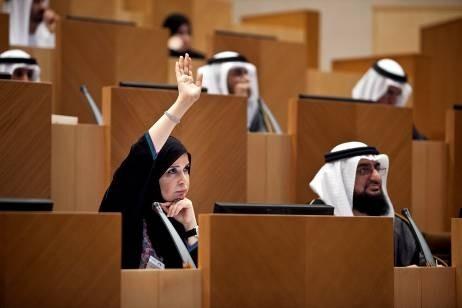
Democracy and the equal participation of men and women in the political arena are closely intertwined. No parliament or any decision-making body can claim to be representative without the participation of both men and women. As stated in the Universal Declaration on Democracy adopted by the Inter-Parliamentary Union’s Member Parliaments in 1997, "The achievement of democracy presupposes a genuine partnership between men and women in the conduct of the affairs of society in which they work in equality and complementarity, drawing mutual enrichment from their differences."
Recent years have seen a steady increase in the number of women in parliament, though the world average of less than 22 percent remains far from the goal of parity between women and men. The election of women to the highest positions of state and government in several countries has also contributed to the changing face of politics.
While the road to election is a difficult one, the challenges for women do not stop there. Once women enter parliament or other bodies, they are faced with many new challenges. Parliament is traditionally a male-oriented domain where the rules and practices have been written by men. It is, therefore, an ongoing challenge to transform parliament into a gender-sensitive environment, to ensure that actions are gender-sensitive and to guarantee that gender is mainstreamed throughout the legislature.
Several NGOs staged a demonstration on Kossuth tér on Sunday to draw attention to violence against women and to speak up for women’s rights more generally.
The issues of empowerment and protection of women need to be given greater prominence in light of the high number of women living in poverty, a conference of parliamentarians from across Southeast Asia heard on Monday.
The United Nations body on gender equality, "UN Women", on Friday pledged to cooperate with the Mozambican parliament, the Assembly of the Republic.
Lok Sabha Speaker Meira Kumar on Wednesday called for "concerted efforts" to guarantee women's say in decision-making and governance, and said it should be incumbent on political parties to ensure at least 30 per cent representation for them in parliaments.
A four-day capacity building workshop organized for aspiring female parliamentary candidates in the country opened at Akosombo on Wednesday.
Women hoping to join Parliament will have to face elections if proposals made by MPs and political party leaders are approved by the House.
Vice-chairperson of the CPN-UML, Bidhya Devi Bhandari, has stressed on promoting women's representation in the national politics for ensuring their rights.
The move decreases the chance of David Cameron being able to fulfil his pledge to have women in a third of the ministerial positions by the end of this government term.
Pagination
- Previous page
- Page 328
- Next page