Parliaments and Representatives

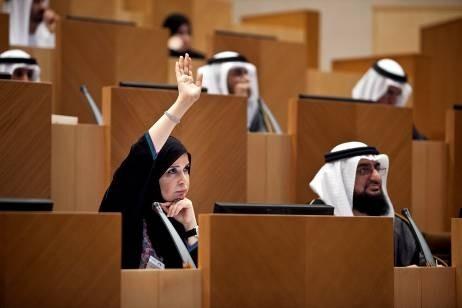
Democracy and the equal participation of men and women in the political arena are closely intertwined. No parliament or any decision-making body can claim to be representative without the participation of both men and women. As stated in the Universal Declaration on Democracy adopted by the Inter-Parliamentary Union’s Member Parliaments in 1997, "The achievement of democracy presupposes a genuine partnership between men and women in the conduct of the affairs of society in which they work in equality and complementarity, drawing mutual enrichment from their differences."

Recent years have seen a steady increase in the number of women in parliament, though the world average of less than 22 percent remains far from the goal of parity between women and men. The election of women to the highest positions of state and government in several countries has also contributed to the changing face of politics.

While the road to election is a difficult one, the challenges for women do not stop there. Once women enter parliament or other bodies, they are faced with many new challenges. Parliament is traditionally a male-oriented domain where the rules and practices have been written by men. It is, therefore, an ongoing challenge to transform parliament into a gender-sensitive environment, to ensure that actions are gender-sensitive and to guarantee that gender is mainstreamed throughout the legislature.

Parliament and the Budgetary Process, Including From a Gender Perspective: Regional Seminar for Parliaments of South-West Asia

Back
March 19, 2007

Parliament and the Budgetary Process, Including From a Gender Perspective: Regional Seminar for Parliaments of South-West Asia

This report compiles the results of a seminar entitled, "Parliament and the Budgetary Process, Including From a Gender Perspective," held in Colombo, Sri Lanka, in May 2003.

This report compiles the results of a seminar entitled, "Parliament and the Budgetary Process, Including From a Gender Perspective," held in Colombo, Sri Lanka, in May 2003.

Promoting Partnership between Men and Women in Parliament: The Experience of the Inter-Parliamentary Union

Back
March 19, 2007

Promoting Partnership between Men and Women in Parliament: The Experience of the Inter-Parliamentary Union

This case study, an excerpt from Women in Parliament, Beyond Numbers, provides an overview of the experiences of the Inter-Parliamentary Union (IPU) in the field of women's parliamentary activities.

This case study, an excerpt from Women in Parliament, Beyond Numbers, provides an overview of the experiences of the Inter-Parliamentary Union (IPU) in the field of women's parliamentary activities.

Does Size Matter? Critical Mass and Women MPs in the New-Zealand House of Representatives

Back
March 12, 2007

Does Size Matter? Critical Mass and Women MPs in the New-Zealand House of Representatives

Citing examples from the New Zealand House of Representatives, this paper tests the claim that women can influence political decisions only once they achieve a critical mass within legislative bodies.

Citing examples from the New Zealand House of Representatives, this paper tests the claim that women can influence political decisions only once they achieve a critical mass within legislative bodies.

Transformative Leadership in the 21st Century

Back
March 12, 2007

Transformative Leadership in the 21st Century

By describing the concepts of transformative leadership and transformative politics, this paper explains the importance of women’s leadership and highlights the roles they can play in transforming politics and governance.

By describing the concepts of transformative leadership and transformative politics, this paper explains the importance of women’s leadership and highlights the roles they can play in transforming politics and governance.

Strengthening Nepal's Multiparty Democracy: Party Discipline and Anti-Defections Measures

Back
March 9, 2007

Strengthening Nepal's Multiparty Democracy: Party Discipline and Anti-Defections Measures

This report documents a seminar held by the National Democratic Institute for International Affairs in Nepal in July 1997. The seminar presented a comparative perspective on parliamentary practices with respect to parliamentary discipline, parliamentary whips, and anti-defections legislation.

This report documents a seminar held by the National Democratic Institute for International Affairs in Nepal in July 1997. The seminar presented a comparative perspective on parliamentary practices with respect to parliamentary discipline, parliamentary whips, and anti-defections legislation.

Constituency Handbook for Elected Representatives in Namibia

Back
March 9, 2007

Constituency Handbook for Elected Representatives in Namibia

This handbook is designed to provide recommendations and suggestions for organizing and conducting constituency outreach activities. It is based on lessons learned in Namibia and other democracies.

This handbook is designed to provide recommendations and suggestions for organizing and conducting constituency outreach activities. It is based on lessons learned in Namibia and other democracies.

Presiding Officers: Speakers and Presidents of Legislatures

Back
March 8, 2007

Presiding Officers: Speakers and Presidents of Legislatures

This paper examines the role of presiding officers in three general models of legislatures: the Westminster Model, the U.S. Congress Model, and the French Bureau Model.

This paper examines the role of presiding officers in three general models of legislatures: the Westminster Model, the U.S. Congress Model, and the French Bureau Model.

One Chamber or Two? Deciding Between a Unicameral And Bicameral Legislature

Back
March 8, 2007

One Chamber or Two? Deciding Between a Unicameral And Bicameral Legislature

This paper identifies some of the central characteristics of bicameral and unicameral legislatures and offers evidence as to why countries may have chosen one model over the other. It also provides information on other legislative structures and examples of cameral changes.

This paper identifies some of the central characteristics of bicameral and unicameral legislatures and offers evidence as to why countries may have chosen one model over the other. It also provides information on other legislative structures and examples of cameral changes.

Constituency Handbook for Members of Parliament: An Overview of NDI's Constituency Outreach Training Program in Malawi

Back
March 8, 2007

Constituency Handbook for Members of Parliament: An Overview of NDI's Constituency Outreach Training Program in Malawi

This handbook was written as a guide to help Members of Parliament in Malawi work effectively with their constituency.

This handbook was written as a guide to help Members of Parliament in Malawi work effectively with their constituency.