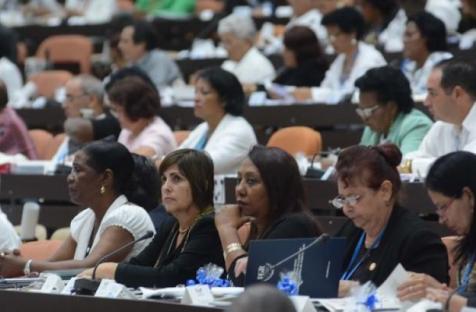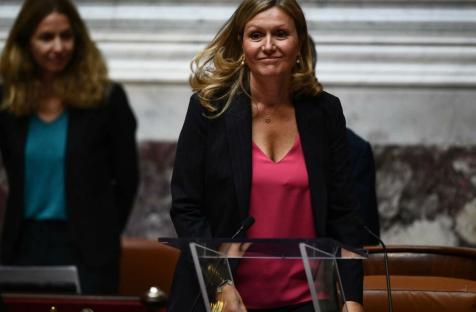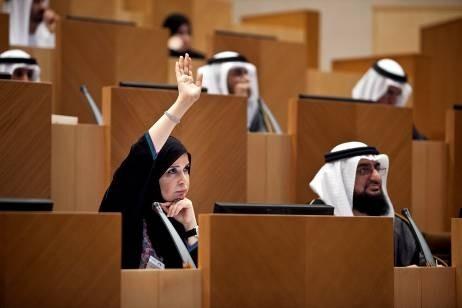
Islamabad: Women have been considered as a passive vote bank and political parties tend to use them mostly for representative functions at public gathering, meetings and campaigns.
Democracy and the equal participation of men and women in the political arena are closely intertwined. No parliament or any decision-making body can claim to be representative without the participation of both men and women. As stated in the Universal Declaration on Democracy adopted by the Inter-Parliamentary Union’s Member Parliaments in 1997, "The achievement of democracy presupposes a genuine partnership between men and women in the conduct of the affairs of society in which they work in equality and complementarity, drawing mutual enrichment from their differences."
Recent years have seen a steady increase in the number of women in parliament, though the world average of less than 22 percent remains far from the goal of parity between women and men. The election of women to the highest positions of state and government in several countries has also contributed to the changing face of politics.
While the road to election is a difficult one, the challenges for women do not stop there. Once women enter parliament or other bodies, they are faced with many new challenges. Parliament is traditionally a male-oriented domain where the rules and practices have been written by men. It is, therefore, an ongoing challenge to transform parliament into a gender-sensitive environment, to ensure that actions are gender-sensitive and to guarantee that gender is mainstreamed throughout the legislature.
Islamabad: Women have been considered as a passive vote bank and political parties tend to use them mostly for representative functions at public gathering, meetings and campaigns.
President Kaïs Saïed is in the process of wiping out hard-won democratic rights in Tunisia.
Chan is a research associate at RepresentWomen with a focus on ranked-choice voting.
The Congress for Democratic Change (CDC) of President George Weah has adopted a resolution that would force the party to have more women in leadership positions.
The 2022 federal election was a win for women candidates, and a historic moment in Australia’s journey towards a parliament that truly endorses and promotes gender equali
Australia's new government will look more like its country, as Prime Minister Anthony Albanese has named a record 10 women to his incoming Cabinet.
Park Ji-hyun has emerged as a leader of South Korea’s opposition and a torchbearer for women fed up with the country’s longstanding gender divide.
The third Global Parliamentary Report examines public engagement in the work of parliament. This report takes a detailed look at why engagement matters and how parliaments globally are engaging with the people they represent.
European countries began electing women in top posts from the late 1970s, though the first woman to head a government in the world was Sri Lanka's PM Sirimavo Bandaranaike.