The Minister of Interior, Bassam Al-Mawlawi, officially announced the results of the parliamentary elections in which 1,043 candidates competed for seats of power.
Democracy and the equal participation of men and women in the political arena are closely intertwined. No parliament or any decision-making body can claim to be representative without the participation of both men and women. As stated in the Universal Declaration on Democracy adopted by the Inter-Parliamentary Union’s Member Parliaments in 1997, "The achievement of democracy presupposes a genuine partnership between men and women in the conduct of the affairs of society in which they work in equality and complementarity, drawing mutual enrichment from their differences."
Recent years have seen a steady increase in the number of women in parliament, though the world average of less than 22 percent remains far from the goal of parity between women and men. The election of women to the highest positions of state and government in several countries has also contributed to the changing face of politics.
While the road to election is a difficult one, the challenges for women do not stop there. Once women enter parliament or other bodies, they are faced with many new challenges. Parliament is traditionally a male-oriented domain where the rules and practices have been written by men. It is, therefore, an ongoing challenge to transform parliament into a gender-sensitive environment, to ensure that actions are gender-sensitive and to guarantee that gender is mainstreamed throughout the legislature.
The Minister of Interior, Bassam Al-Mawlawi, officially announced the results of the parliamentary elections in which 1,043 candidates competed for seats of power.
Because “women’s issues” have been in the headlines over the last year, it may seem strange they have not been more prominent in the election campaign.
The political landscape in Asia has been very dynamic lately, but it is a disappointment to me personally that events have not been kind to women.
In this special Women in Politics series for the Australia-PNG Network, the Lowy Institute's Jessica Collins sits down with prominent women from Papua New Guinea to discuss the deep-seated challenge of wom
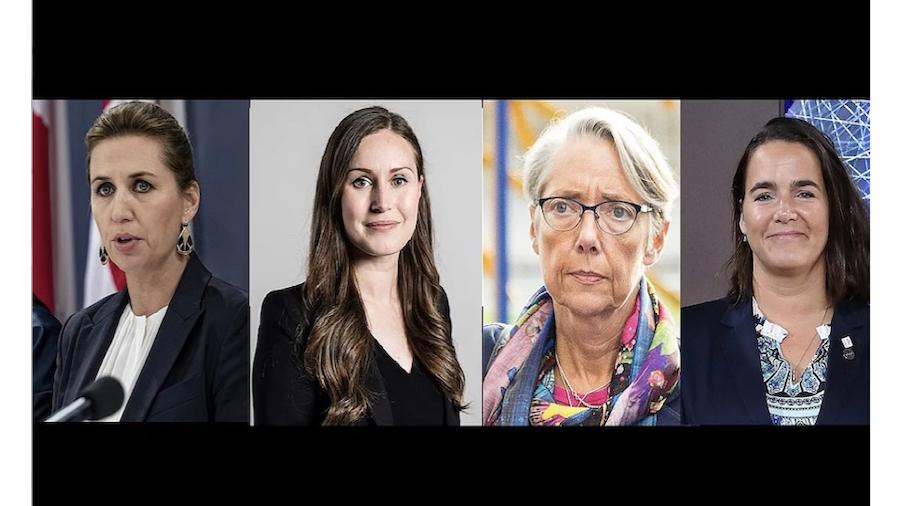
PARIS (AFP) - Elisabeth Borne, a 61-year-old engineer, was named French prime minister on Monday (May 16), becoming only the second woman
This is a “win for all women.”
As a high number of women leave the National Assembly, things are slow to change — but getting better.
Centrist politician Elisabeth Borne was appointed France’s new prime minister on Monday, becoming the second woman to hold the post in the country.
Japan's Lower House of the Diet plans a questionnaire on women's participation in politics as the country largely lags behind in female representation in national parliaments.