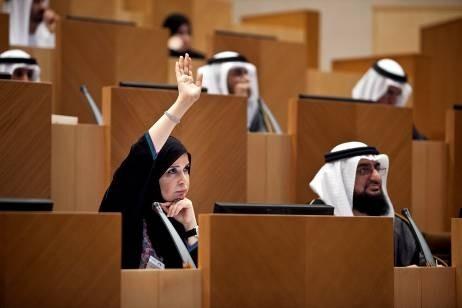
A dozen of women groups have expressed their concerns and dissatisfaction over the number of women that were elected on the 9th April elections as members of the country’s National Assembly.
Democracy and the equal participation of men and women in the political arena are closely intertwined. No parliament or any decision-making body can claim to be representative without the participation of both men and women. As stated in the Universal Declaration on Democracy adopted by the Inter-Parliamentary Union’s Member Parliaments in 1997, "The achievement of democracy presupposes a genuine partnership between men and women in the conduct of the affairs of society in which they work in equality and complementarity, drawing mutual enrichment from their differences."
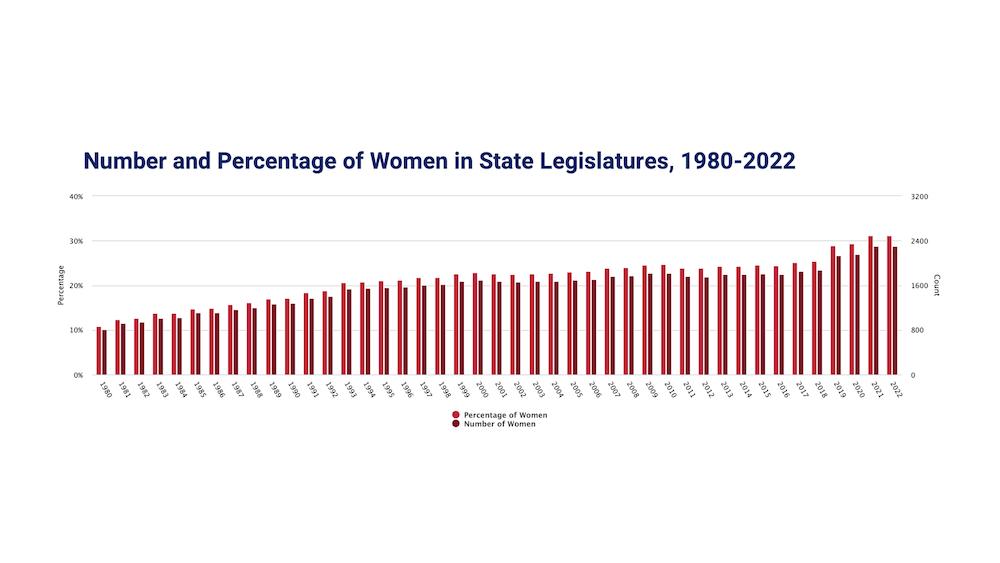
Recent years have seen a steady increase in the number of women in parliament, though the world average of less than 22 percent remains far from the goal of parity between women and men. The election of women to the highest positions of state and government in several countries has also contributed to the changing face of politics.
While the road to election is a difficult one, the challenges for women do not stop there. Once women enter parliament or other bodies, they are faced with many new challenges. Parliament is traditionally a male-oriented domain where the rules and practices have been written by men. It is, therefore, an ongoing challenge to transform parliament into a gender-sensitive environment, to ensure that actions are gender-sensitive and to guarantee that gender is mainstreamed throughout the legislature.
A dozen of women groups have expressed their concerns and dissatisfaction over the number of women that were elected on the 9th April elections as members of the country’s National Assembly.
The newly appointed Cabinet which consists of 17 Ministers has failed to include female representation.
The new Cabinet was appointed by President Gotabaya Rajapaksa at the President’s House in Colombo today.
By Alice Kantor
Few feminist policies have been campaign talking points during the election.
Although Somalia now has a quota system for female lawmakers, women are frequently held back from pursuing leadership roles due to pervasive cultural and social barriers.
Just four women were elected during the 2022 general election but a deeper analysis also shows that women contesting on the Labour ticket obtained almost 20,000 first-count votes, which compares very well with the 14,000 first preferences obtained in 2017.
Tashkent, Uzbekistan (UzDaily.com) – On 13 April, the second forum on the topic "The role of women parliamentarians in the development of Uzbekistan" was held in the capital.
The life of a politician isn’t easy — even less so if you’re the leader of a party and a woman, says Quebec Liberal Party leader Dominique Anglade.
The Mauritanian presidency announced the formation of a new government of 25 ministers headed by Prime Minister Mohamed Ould Bilal.
In a good example of parliamentary outreach to young people, the second edition of the Guyana National Youth Debating Competition takes place on Friday, 8 April.