Parliaments and Representatives
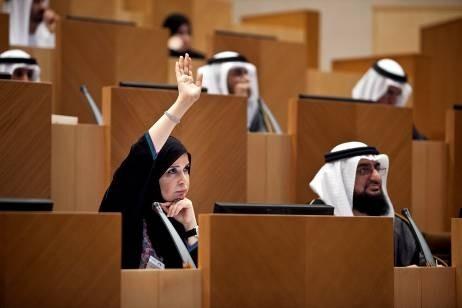
Democracy and the equal participation of men and women in the political arena are closely intertwined. No parliament or any decision-making body can claim to be representative without the participation of both men and women. As stated in the Universal Declaration on Democracy adopted by the Inter-Parliamentary Union’s Member Parliaments in 1997, "The achievement of democracy presupposes a genuine partnership between men and women in the conduct of the affairs of society in which they work in equality and complementarity, drawing mutual enrichment from their differences."
Recent years have seen a steady increase in the number of women in parliament, though the world average of less than 22 percent remains far from the goal of parity between women and men. The election of women to the highest positions of state and government in several countries has also contributed to the changing face of politics.
While the road to election is a difficult one, the challenges for women do not stop there. Once women enter parliament or other bodies, they are faced with many new challenges. Parliament is traditionally a male-oriented domain where the rules and practices have been written by men. It is, therefore, an ongoing challenge to transform parliament into a gender-sensitive environment, to ensure that actions are gender-sensitive and to guarantee that gender is mainstreamed throughout the legislature.
Karen Adam MSP: 'Difficult to convince women to stand in council elections'
Convincing women to run in the upcoming local elections has been “really difficult”, SNP MSP Karen Adam has said, as she urged women and minorities to take up more leadership roles.
Virtual Senedd meetings should continue long after Covid to make politics accessible to all, a politician with an eight-year-old son has said.
Manipur: Why women remain underrepresented in electoral politics
For the first time ever, 55,000 more women than men will be electing its next legislature.
Action is needed to avoid losing a generation of women and minorities in politics, MPs have argued today.
The plan to have five regional seats reserved for women beginning in the general election this year has been shelved, a senior government official told a parliamentary committee yesterday.
The global proportion of women parliamentarians has increased by 0.6 percentage points to reach 26.1 per cent according to the IPU’s latest
The House of Representatives has rejected a bill seeking to reserve special seats for Women at the National and State Houses of Assembly.
Nicola Sturgeon said she fears the forthcoming council elections will see equal representation go “backwards” as women are reluctant to enter the “toxic” world of politics.
Pagination
- Previous page
- Page 128
- Next page