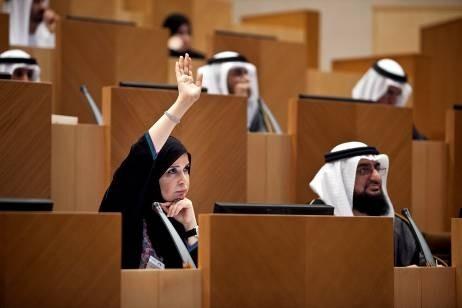
A CROSS section of female politicians in Namibia have voiced their concern over the slow progress of political parties in implementing 50/50 (zebra style) representation in party structures and parliament.
Democracy and the equal participation of men and women in the political arena are closely intertwined. No parliament or any decision-making body can claim to be representative without the participation of both men and women. As stated in the Universal Declaration on Democracy adopted by the Inter-Parliamentary Union’s Member Parliaments in 1997, "The achievement of democracy presupposes a genuine partnership between men and women in the conduct of the affairs of society in which they work in equality and complementarity, drawing mutual enrichment from their differences."
Recent years have seen a steady increase in the number of women in parliament, though the world average of less than 22 percent remains far from the goal of parity between women and men. The election of women to the highest positions of state and government in several countries has also contributed to the changing face of politics.
While the road to election is a difficult one, the challenges for women do not stop there. Once women enter parliament or other bodies, they are faced with many new challenges. Parliament is traditionally a male-oriented domain where the rules and practices have been written by men. It is, therefore, an ongoing challenge to transform parliament into a gender-sensitive environment, to ensure that actions are gender-sensitive and to guarantee that gender is mainstreamed throughout the legislature.
A CROSS section of female politicians in Namibia have voiced their concern over the slow progress of political parties in implementing 50/50 (zebra style) representation in party structures and parliament.
This policy brief shows that while much remains to be explored, there are clear links between anti-corruption and women's political participation that are important to understand for politicians, anti-corruption advocates, and those working on increasing women’s repre
The court has turned down a constitutional case filed by independent candidate Arnold Cassola against government over the gender corrective mechanism approved by parliament last April.
Over 30 years since declaring independence from Somalia in 1991, the Republic of Somaliland has established itself as a paragon of stability in a tough neighbourhood.
Communities across NSW can look forward to better, more representative local government following a dramatic rise in the number of women elected to councils, the sector's peak body said. MidCoast Council has four female councillors including one new councillors.
A politician has called for an end to the insults that women receive on social media when they enter the political spotlight.
Just before Christmas, a government report highlighted that over half of the Irish population believes the most important role for a woman is to take care of her home and family. The most important role for a man, according to a significant proportion of the popu
The new government has been sworn into office in the Netherlands, a record 299 days after the country's last election.Mark Rutte is now set to become the Netherlands’ longest-serving prime minister as he leads a fourth separate executive.
As the Columbia City Council begins its first full week of business in the new year, it also marks the start of the tenures for two history-making women. Dr.