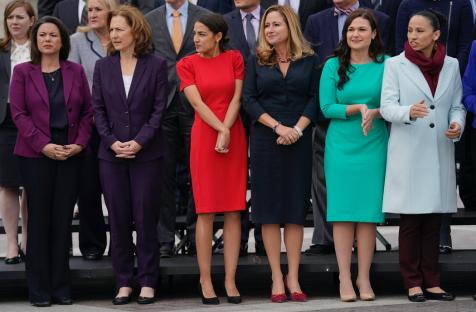

On Thursday night, the Craven County GOP elected Sarah Benischek as the party's new chairman. The announcement marked a victory for women in local politics after a recent report found women are not represented equally to their male counterparts.
Democracy and the equal participation of men and women in the political arena are closely intertwined. No parliament or any decision-making body can claim to be representative without the participation of both men and women. As stated in the Universal Declaration on Democracy adopted by the Inter-Parliamentary Union’s Member Parliaments in 1997, "The achievement of democracy presupposes a genuine partnership between men and women in the conduct of the affairs of society in which they work in equality and complementarity, drawing mutual enrichment from their differences."
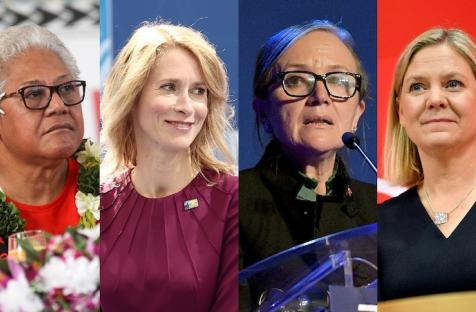
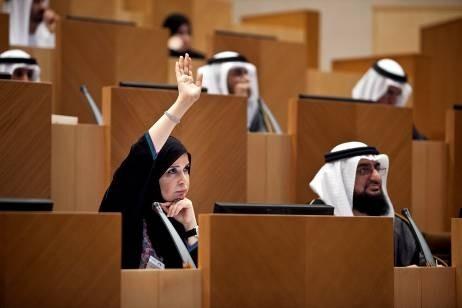
Recent years have seen a steady increase in the number of women in parliament, though the world average of less than 22 percent remains far from the goal of parity between women and men. The election of women to the highest positions of state and government in several countries has also contributed to the changing face of politics.
While the road to election is a difficult one, the challenges for women do not stop there. Once women enter parliament or other bodies, they are faced with many new challenges. Parliament is traditionally a male-oriented domain where the rules and practices have been written by men. It is, therefore, an ongoing challenge to transform parliament into a gender-sensitive environment, to ensure that actions are gender-sensitive and to guarantee that gender is mainstreamed throughout the legislature.
On Thursday night, the Craven County GOP elected Sarah Benischek as the party's new chairman. The announcement marked a victory for women in local politics after a recent report found women are not represented equally to their male counterparts.
Lawmakers around the world have a new resource to help them address gender inequality with the publication of the new IPU and UN Women Handbook on gender-responsive law making.
This Handbook aims to serve as a resource for lawmakers from around the world for designing gender-responsive laws.
By Ashleigh Streeter-Jones
New reports published ahead of the UN Climate Change Conference COP26 in Glasgow in November show that decision-making and technical panels under UN Climate Change (known as “constituted bodies”) are increasingly integrating a gender perspective into their work,
This working paper is part of UN Women’s research efforts to highlight the importance of women’s leadership and participation in decision-making during the pandemic and beyond.
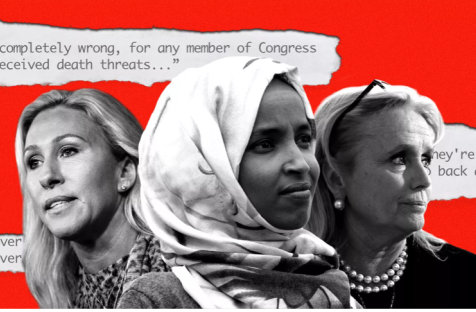
Recently, the issue of harassment and intimidation of women in politics in long-established democracies has become a source of concern.
As the new German Bundestag sits for the first time on 26 October, IPU data shows that it has more women MPs and that the number of young MPs has significantly increased compared with the previous legislature elected in 2017.