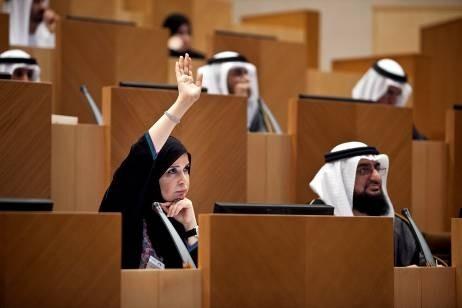
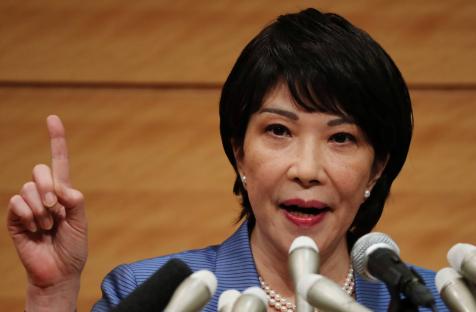
Two women are in contention to become prime minister of Japan for the first time in its history — a potential turning point for a country that ranks below Saudi Arabia in terms of female political representation.
Democracy and the equal participation of men and women in the political arena are closely intertwined. No parliament or any decision-making body can claim to be representative without the participation of both men and women. As stated in the Universal Declaration on Democracy adopted by the Inter-Parliamentary Union’s Member Parliaments in 1997, "The achievement of democracy presupposes a genuine partnership between men and women in the conduct of the affairs of society in which they work in equality and complementarity, drawing mutual enrichment from their differences."
Recent years have seen a steady increase in the number of women in parliament, though the world average of less than 22 percent remains far from the goal of parity between women and men. The election of women to the highest positions of state and government in several countries has also contributed to the changing face of politics.
While the road to election is a difficult one, the challenges for women do not stop there. Once women enter parliament or other bodies, they are faced with many new challenges. Parliament is traditionally a male-oriented domain where the rules and practices have been written by men. It is, therefore, an ongoing challenge to transform parliament into a gender-sensitive environment, to ensure that actions are gender-sensitive and to guarantee that gender is mainstreamed throughout the legislature.
Two women are in contention to become prime minister of Japan for the first time in its history — a potential turning point for a country that ranks below Saudi Arabia in terms of female political representation.
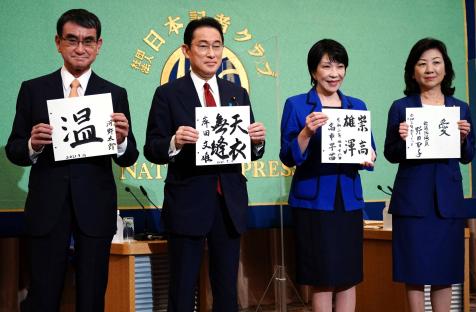
Two women have entered the race for the leadership of Japan’s ruling party for the first time in its 66-year history, putting in the spotlight both the strides taken and the hurdles that still face female politicians in a country that lags far behind
The United Nations Deputy Secretary-General, Amina J.
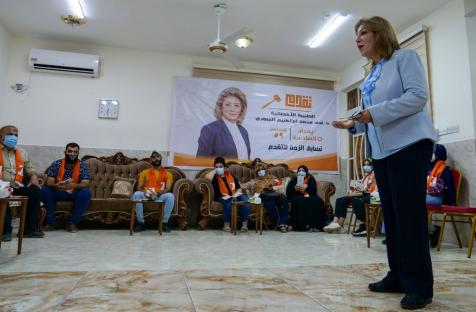
BAGHDAD, Sept 16 (Reuters) - A powerful mix of insecurity and traditional prejudice against more liberal female politicians put Awatef Rasheed off running for parliament when she returned to Iraq in 2014 after years abroad.
This year marks the 100th anniversary of women's suffrage in Sweden, practiced for the first time in September 1921.
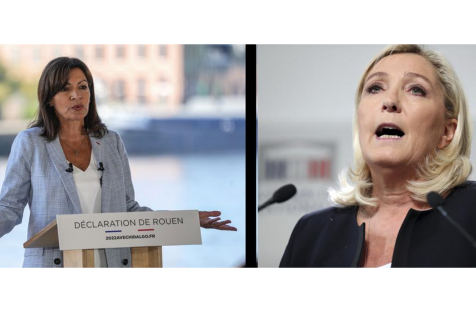
PARIS (AP) — Two French politicians kicked off their presidential campaigns Sunday, seeking to become France’s first female leader in next year’s spring election.
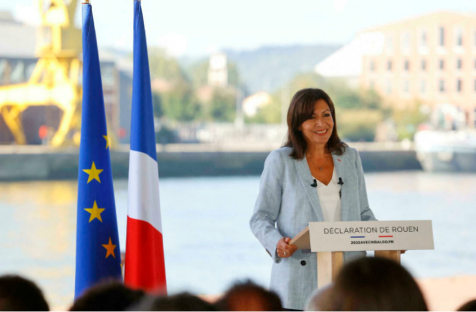
Paris Mayor Anne Hidalgo threw her hat in the ring for France's 2022 presidential election on Sunday in Rouen.
By William Pesek
By William Pesek
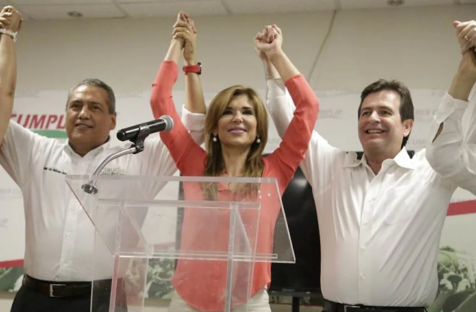
HERMOSILLO, Mexico — When Claudia Pavlovich ran for governor of Sonora, a vast swath of cowboy country south of Arizona, not a single Mexican state was led by a woman. Fewer than 10 percent of the nation’s mayors were female.