Parliaments and Representatives

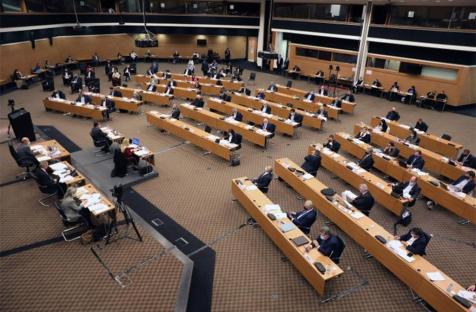
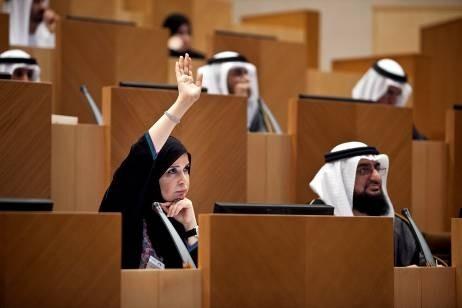
Democracy and the equal participation of men and women in the political arena are closely intertwined. No parliament or any decision-making body can claim to be representative without the participation of both men and women. As stated in the Universal Declaration on Democracy adopted by the Inter-Parliamentary Union’s Member Parliaments in 1997, "The achievement of democracy presupposes a genuine partnership between men and women in the conduct of the affairs of society in which they work in equality and complementarity, drawing mutual enrichment from their differences."

Recent years have seen a steady increase in the number of women in parliament, though the world average of less than 22 percent remains far from the goal of parity between women and men. The election of women to the highest positions of state and government in several countries has also contributed to the changing face of politics.

While the road to election is a difficult one, the challenges for women do not stop there. Once women enter parliament or other bodies, they are faced with many new challenges. Parliament is traditionally a male-oriented domain where the rules and practices have been written by men. It is, therefore, an ongoing challenge to transform parliament into a gender-sensitive environment, to ensure that actions are gender-sensitive and to guarantee that gender is mainstreamed throughout the legislature.

Ofelia Fernandez: Inspiring young women all over Latin America

Back
April 9, 2021

Ofelia Fernandez: Inspiring young women all over Latin America

A determined feminist, Ofelia Fernandez is the youngest lawmaker in Latin America. The 20-year-old is an icon for many, but she has a few detractors. 

A determined feminist, Ofelia Fernandez is the youngest lawmaker in Latin America. The 20-year-old is an icon for many, but she has a few detractors. 

© Michael Reynolds/ AFP
April 7, 2021
From fundraising to the VP, why 2020 was a pivotal year for women in US politics

2020 was a milestone year for women in politics in the US. The country saw the highest numbers of women entering Congress and the executive in its history.

April 7, 2021
This is what leadership looks like: Meet Cecilia Moyoviri Moye, an indigenous woman Senator in Bolivia’s Legislative Assembly

After the November 2020 national elections, women make up 49 per cent of the Legislative Assembly of the Plurinational State of Bolivia, cementing its position as a forerunner on gender parity in politics.

April 7, 2021
This is what leadership looks like: Meet Elena Crasmari, the only woman in her local council in Moldova

Elena Crasmari decided to run for office so that the local administration could meet the needs of all members of her community.

April 6, 2021
“Equality Index” of women mayors and councillors in Austria

The Institute for Social Research of Austria (SORA) surveyed the proportion of women among all mayors and councillors in Austria as part of the “Equality Index” for the Austrian Association of Cities and Towns (AACT).

UNW IPU
April 1, 2021
Women in politics: new data shows growth but also setbacks

Despite increases in the number of women at the highest levels of political power, widespread gender inequalities persist, according to the 2021 edition of the 

April 1, 2021
Can gender quotas counter sexism in Australian politics?

In recent months, Australians have grown accustomed to stories of sexual impropriety by their politicians dominating the news headlines.

March 31, 2021
Record number of women win on Israel’s election day, but progress remains elusive

A projected 30 women will enter the Israeli legislature, a record for an Election Day, but it appears female representation in parliament will remain roughly the same for the 24th Knesset as in past sessions.

Enhancing participation of women from under-represented groups in political and public decision-making

Back
March 25, 2021

Enhancing participation of women from under-represented groups in political and public decision-making

Although significant progress has been made with regard to the participation of women in political and public decision-making in Europe, such progress is too slow and uneven.

Although significant progress has been made with regard to the participation of women in political and public decision-making in Europe, such progress is too slow and uneven.