Parliaments and Representatives

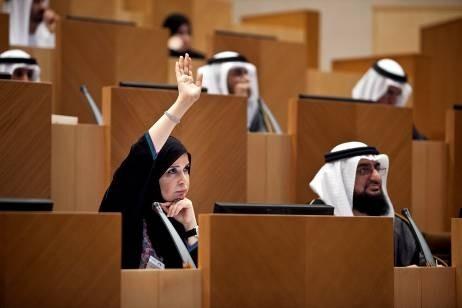
Democracy and the equal participation of men and women in the political arena are closely intertwined. No parliament or any decision-making body can claim to be representative without the participation of both men and women. As stated in the Universal Declaration on Democracy adopted by the Inter-Parliamentary Union’s Member Parliaments in 1997, "The achievement of democracy presupposes a genuine partnership between men and women in the conduct of the affairs of society in which they work in equality and complementarity, drawing mutual enrichment from their differences."

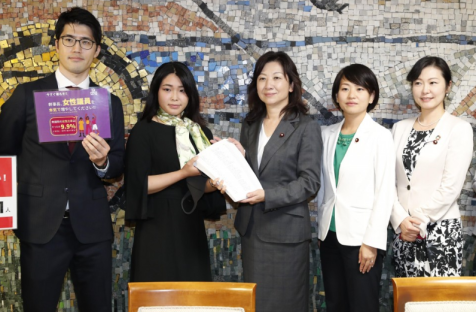
Recent years have seen a steady increase in the number of women in parliament, though the world average of less than 22 percent remains far from the goal of parity between women and men. The election of women to the highest positions of state and government in several countries has also contributed to the changing face of politics.

While the road to election is a difficult one, the challenges for women do not stop there. Once women enter parliament or other bodies, they are faced with many new challenges. Parliament is traditionally a male-oriented domain where the rules and practices have been written by men. It is, therefore, an ongoing challenge to transform parliament into a gender-sensitive environment, to ensure that actions are gender-sensitive and to guarantee that gender is mainstreamed throughout the legislature.

Gender-Sensitive Parliaments

Back
December 5, 2019

Gender-Sensitive Parliaments

The Report on Gender-Sensitive Parliaments is the result of a two-year research project. It follows up on a previous IPU publication, Equality in Politics: A Survey of Women and Men in Parliaments (2008).

The Report on Gender-Sensitive Parliaments is the result of a two-year research project. It follows up on a previous IPU publication, Equality in Politics: A Survey of Women and Men in Parliaments (2008).

e-Discussions

October 31, 2019
Women MPs say abuse forcing them from politics

MPs have increasingly become the target of abuse - and some women politicians say they are bearing the brunt of it.

October 30, 2019
Sexism in parliament in Iceland: The numbers don’t lie

According to a new study, around 80% of women in Parliament are exposed to gender-based violence. In May, the study surveyed 33 women who are working in or have recently quit Parliament, with 25 women responding.

Here are the most gender-balanced cabinets in the world today

Back
October 2, 2019

Here are the most gender-balanced cabinets in the world today

There are currently 22 gender-balanced cabinets, of which 14 have at least 50% of women ministers. 

There are currently 22 gender-balanced cabinets, of which 14 have at least 50% of women ministers. 

September 27, 2019
In Nepal, an uphill battle for gender parity

Female representation in Nepal's parliament has increased dramatically in the last 10 years.

Situational analysis of women’s political participation in Zimbabwe

Back
September 13, 2019

Situational analysis of women’s political participation in Zimbabwe

The state of women’s political participation in Zimbabwe is undesirable, an anti-thesis to the country’s development.

The state of women’s political participation in Zimbabwe is undesirable, an anti-thesis to the country’s development.

Event

Event

Fourteenth Workshop of Parliamentary Scholars and Parliamentarians

Back

Fourteenth Workshop of Parliamentary Scholars and Parliamentarians

This Workshop will bring together scholars and parliamentarians in order to discuss research findings which are likely to be of practical use to parli