How do we know whether women are achieving equitable levels of political representation? For many years, scholars have focused on women’s representation in legislatures.
Democracy and the equal participation of men and women in the political arena are closely intertwined. No parliament or any decision-making body can claim to be representative without the participation of both men and women. As stated in the Universal Declaration on Democracy adopted by the Inter-Parliamentary Union’s Member Parliaments in 1997, "The achievement of democracy presupposes a genuine partnership between men and women in the conduct of the affairs of society in which they work in equality and complementarity, drawing mutual enrichment from their differences."
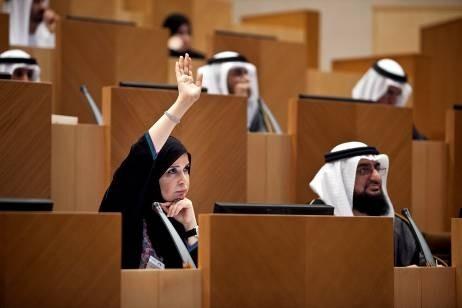
Recent years have seen a steady increase in the number of women in parliament, though the world average of less than 22 percent remains far from the goal of parity between women and men. The election of women to the highest positions of state and government in several countries has also contributed to the changing face of politics.
While the road to election is a difficult one, the challenges for women do not stop there. Once women enter parliament or other bodies, they are faced with many new challenges. Parliament is traditionally a male-oriented domain where the rules and practices have been written by men. It is, therefore, an ongoing challenge to transform parliament into a gender-sensitive environment, to ensure that actions are gender-sensitive and to guarantee that gender is mainstreamed throughout the legislature.
How do we know whether women are achieving equitable levels of political representation? For many years, scholars have focused on women’s representation in legislatures.
This map is a unique visual tool that captures women’s participation in executive government and in parliament on a given date—1st January 2019.
The annual report provides an update and analysis of progress made and setbacks encountered by women in parliament further to elections and renewals held over a year.
Investing in gender equality: Parliaments ensuring social protection, public services and infrastructure deliver for women and girls.
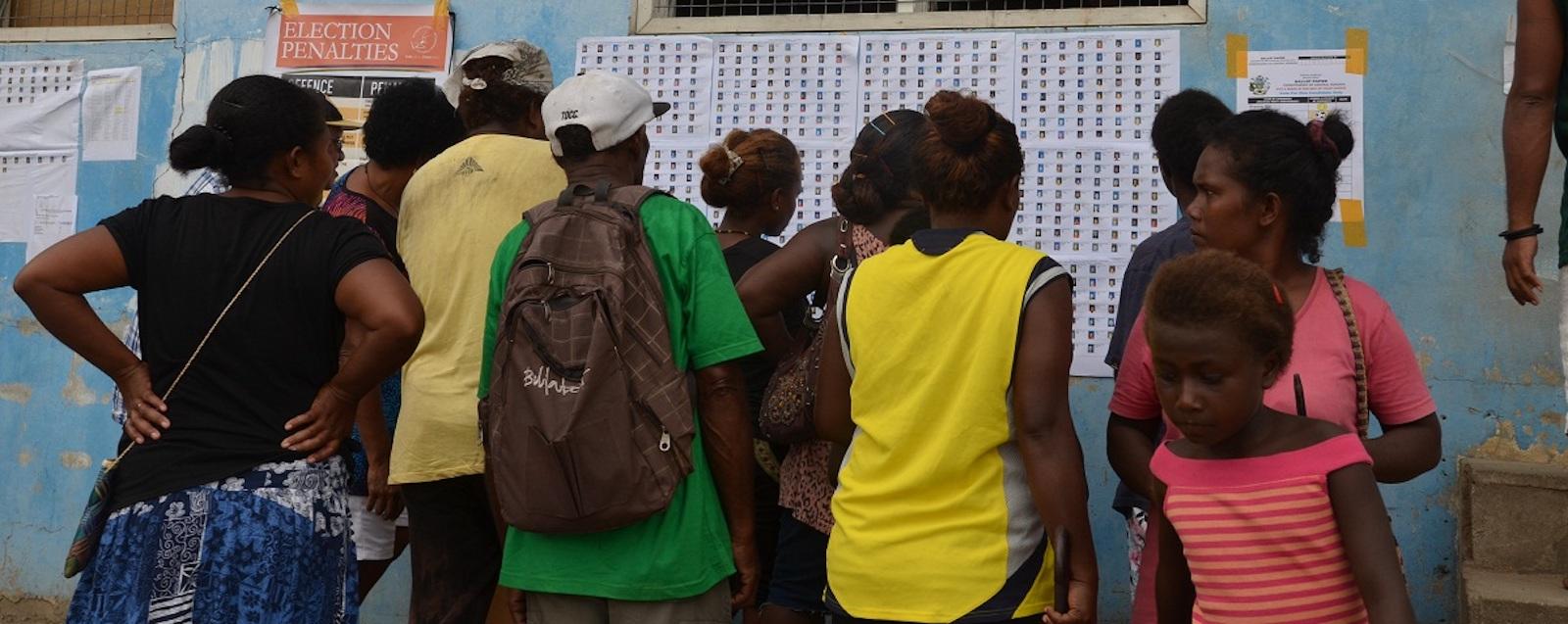
By Kerryn Baker
In January 2018, the Government Equalities Office (GEO) commissioned this rapid evidence review, the two broad aims of which were to identify: a) barriers to women’s participation in local and
The importance of having women serving in Congress is still not fully appreciated or understood.
Path to Parity: How Women Run and Win distills Political Parity’s research on women candidates and elected officeholders, drawing on additional studies to illuminate issues and proffer strategies
The 2019 Parliamentary Hearing at the United Nations will take place on 21-22 February in New York.