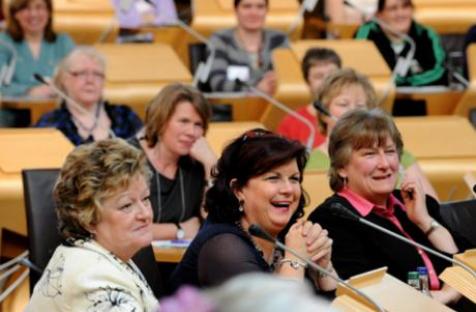
January 4, 2015
Gender equality: time for quotas in Scottish politics?
We have a woman who is First Minister if that’s not an example of us reaching gender equality, what is?
Democracy and the equal participation of men and women in the political arena are closely intertwined. No parliament or any decision-making body can claim to be representative without the participation of both men and women. As stated in the Universal Declaration on Democracy adopted by the Inter-Parliamentary Union’s Member Parliaments in 1997, "The achievement of democracy presupposes a genuine partnership between men and women in the conduct of the affairs of society in which they work in equality and complementarity, drawing mutual enrichment from their differences."
Recent years have seen a steady increase in the number of women in parliament, though the world average of less than 22 percent remains far from the goal of parity between women and men. The election of women to the highest positions of state and government in several countries has also contributed to the changing face of politics.
While the road to election is a difficult one, the challenges for women do not stop there. Once women enter parliament or other bodies, they are faced with many new challenges. Parliament is traditionally a male-oriented domain where the rules and practices have been written by men. It is, therefore, an ongoing challenge to transform parliament into a gender-sensitive environment, to ensure that actions are gender-sensitive and to guarantee that gender is mainstreamed throughout the legislature.
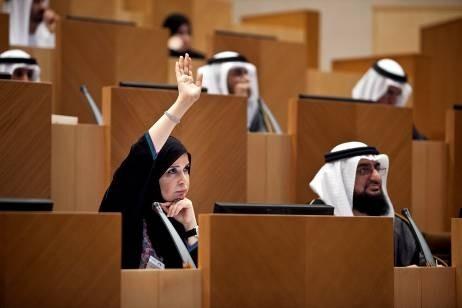
We have a woman who is First Minister if that’s not an example of us reaching gender equality, what is?
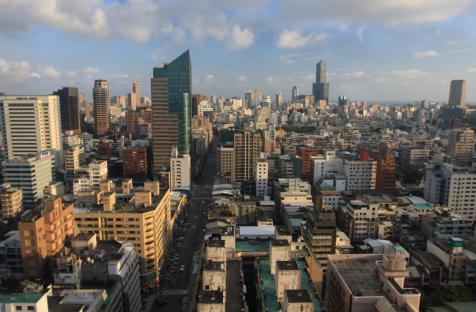
A new day for women dawned in Taiwan Thursday, with females winning seven of the 22 city and county council speaker positions throughout the country.
by Lucile Huguet Scotland didn’t get enough Yes to become independent from England. However, the country is at a real turning point of its history. Scotland got its first female politician elected as head of the country. As we know, the No vote was predominant at the last referendum where people were asked if they wanted Scotland to remain part of the UK or not.

Justin Trudeau’s ejection of two Liberal MPs from his caucus—over allegations of sexual harassment of two anonymous NDP MPs—has unnerved Ottawa.

Justin Trudeau’s ejection of two Liberal MPs from his caucus—over allegations of sexual harassment of two anonymous NDP MPs—has unnerved Ottawa.
In the 2014 Fiji general election, 14% of elected parliamentarians were women. This percentage represents the largest proportion of women in Fiji’s parliament since independence in 1970.

In the 2014 Fiji general election, 14% of elected parliamentarians were women. This percentage represents the largest proportion of women in Fiji’s parliament since independence in 1970.


By Malgorzata Bratkrajc, A new European Commission took office on November 1st, 2014. Unsurprisingly, the composition of the new Commission confirmed that the flagship EU initiative of gender balance in decision-making positions is not being taken seriously when it comes to the ‘top’ EU jobs.

