One hundred and eleven years ago today, December 16, 1903, was the day Australians elected their second Federal Parliament and the first day all non-indigenous women of voting age in Victor
Democracy and the equal participation of men and women in the political arena are closely intertwined. No parliament or any decision-making body can claim to be representative without the participation of both men and women. As stated in the Universal Declaration on Democracy adopted by the Inter-Parliamentary Union’s Member Parliaments in 1997, "The achievement of democracy presupposes a genuine partnership between men and women in the conduct of the affairs of society in which they work in equality and complementarity, drawing mutual enrichment from their differences."
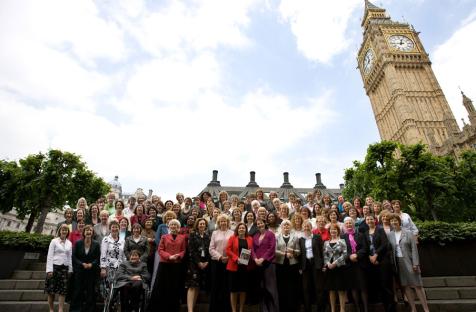
Recent years have seen a steady increase in the number of women in parliament, though the world average of less than 22 percent remains far from the goal of parity between women and men. The election of women to the highest positions of state and government in several countries has also contributed to the changing face of politics.
While the road to election is a difficult one, the challenges for women do not stop there. Once women enter parliament or other bodies, they are faced with many new challenges. Parliament is traditionally a male-oriented domain where the rules and practices have been written by men. It is, therefore, an ongoing challenge to transform parliament into a gender-sensitive environment, to ensure that actions are gender-sensitive and to guarantee that gender is mainstreamed throughout the legislature.
One hundred and eleven years ago today, December 16, 1903, was the day Australians elected their second Federal Parliament and the first day all non-indigenous women of voting age in Victor
South Asian writers avoid writing on gender issues, but Dr Anita Weiss rightly explained the politic
Megumi Kaneko stood on a podium in front of a poster of herself and dissolved into tears as she urged the mostly-male audience to pick her in this weekend’s Japanese e
Ukraine’s new parliament has the highest number of female lawmakers in history. There are 50 of them, or 12 percent of the 421 lawmakers.
The Jordanian parliament is no stranger to screaming matches but a recent incident was so controversial that it provoked people to poke fun at their MPs online.