July 26, 2014
Politics still an exclusive and largely male pursuit, Fianna Fáil councillors say, Ireland
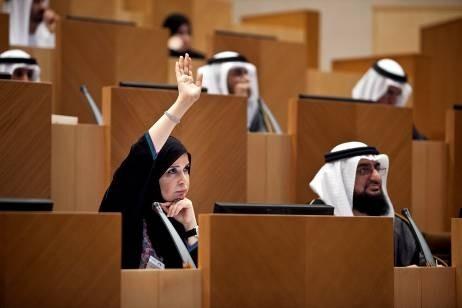
Democracy and the equal participation of men and women in the political arena are closely intertwined. No parliament or any decision-making body can claim to be representative without the participation of both men and women. As stated in the Universal Declaration on Democracy adopted by the Inter-Parliamentary Union’s Member Parliaments in 1997, "The achievement of democracy presupposes a genuine partnership between men and women in the conduct of the affairs of society in which they work in equality and complementarity, drawing mutual enrichment from their differences."
Recent years have seen a steady increase in the number of women in parliament, though the world average of less than 22 percent remains far from the goal of parity between women and men. The election of women to the highest positions of state and government in several countries has also contributed to the changing face of politics.
While the road to election is a difficult one, the challenges for women do not stop there. Once women enter parliament or other bodies, they are faced with many new challenges. Parliament is traditionally a male-oriented domain where the rules and practices have been written by men. It is, therefore, an ongoing challenge to transform parliament into a gender-sensitive environment, to ensure that actions are gender-sensitive and to guarantee that gender is mainstreamed throughout the legislature.
Following David Cameron’s cabinet reshuffle, the UK government has moved from having three women in the cabinet to five: and these two new members are working mothers, a presence not there before.
The Public Defender’s Office has expressed its concerns over the declining rate of women's participation in the country’s political life experiences and there is no progress observed on the horizon.
Following David Cameron’s cabinet reshuffle, the UK government has moved from having three women in the cabinet to five: and these two new members are working mothers, a presence not there before.
Emily Benn, the 24 year-old granddaughter of the late Labour grandee Tony Benn, is poised to become the fifth generation of her family to sit in the Commons. In this article she explains why she's running.
AUSTRALIA has slipped to 48th on the rankings of the number of women in national parliaments but our political glass ceiling is no worse than gender barriers in Canada, Britain and the US.
Women in politics is high on the agenda this week after David Cameron's reshuffle which his own spin doctors rather unfortunately dubbed a ‘catwalk reshuffle’.
Somali women leaders met in Mogadishu on Sunday (July 20th) to demand greater representation in national politics and clear constitutional provisions protecting their participation, Somalia's Hiiraan Online reported.