Parliaments and Representatives

Democracy and the equal participation of men and women in the political arena are closely intertwined. No parliament or any decision-making body can claim to be representative without the participation of both men and women. As stated in the Universal Declaration on Democracy adopted by the Inter-Parliamentary Union’s Member Parliaments in 1997, "The achievement of democracy presupposes a genuine partnership between men and women in the conduct of the affairs of society in which they work in equality and complementarity, drawing mutual enrichment from their differences."

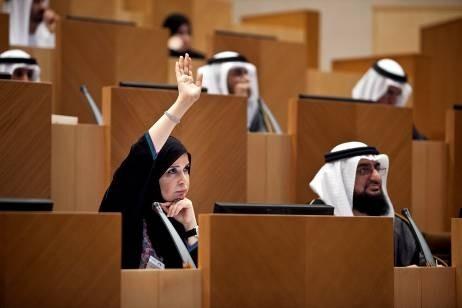
Recent years have seen a steady increase in the number of women in parliament, though the world average of less than 22 percent remains far from the goal of parity between women and men. The election of women to the highest positions of state and government in several countries has also contributed to the changing face of politics.

While the road to election is a difficult one, the challenges for women do not stop there. Once women enter parliament or other bodies, they are faced with many new challenges. Parliament is traditionally a male-oriented domain where the rules and practices have been written by men. It is, therefore, an ongoing challenge to transform parliament into a gender-sensitive environment, to ensure that actions are gender-sensitive and to guarantee that gender is mainstreamed throughout the legislature.

The representation of minorities and indigenous people in parliament: a global overview

Back
June 17, 2014

The representation of minorities and indigenous people in parliament: a global overview

The Global overview contains an analysis of responses to a questionnaire sent to all national parliaments in 2009.

The Global overview contains an analysis of responses to a questionnaire sent to all national parliaments in 2009.

The hidden minorities: Representing ethnic minorities and indigenous peoples in Cambodia

Back
June 17, 2014

The hidden minorities: Representing ethnic minorities and indigenous peoples in Cambodia

Following a century of conflict, Cambodia has tried to forge a new democratic path. Multiparty elections have been held regularly since 1993, and the two chambers of the parliament—the National Assembly and the Senate—have established their own rules and internal regulations.

Following a century of conflict, Cambodia has tried to forge a new democratic path. Multiparty elections have been held regularly since 1993, and the two chambers of the parliament—the National Assembly and the Senate—have established their own rules and internal regulations.

IPU report on gender sensitive parliaments

Back
June 17, 2014

IPU report on gender sensitive parliaments

The Report on Gender sensitive Parliaments is the result of a two-year research project. It follows up on a previous IPU publication, Equality in Politics: A Survey of Women and Men in Parliaments (2008).

The Report on Gender sensitive Parliaments is the result of a two-year research project. It follows up on a previous IPU publication, Equality in Politics: A Survey of Women and Men in Parliaments (2008).

Social Media Guidelines for Parliaments

Back
June 17, 2014

Social Media Guidelines for Parliaments

You cannot wait for the people to come to parliament; you need to go where the people are. Today, the people are on social media.

You cannot wait for the people to come to parliament; you need to go where the people are. Today, the people are on social media.

Event

Event

Pacific Women’s Parliamentary Partnerships Forum 2014

Back

Pacific Women’s Parliamentary Partnerships Forum 2014

Pacific Women’s Parliamentary Partnerships, funded by the Australian Government, will support the professional and skills development of Pacific women parliamentarians and

June 13, 2014
Female political participation in the Pacific

Last week I was in Tahiti (yes, I know) for PIPSA, the biannual Pacific Islands Political Science Association conference, to discuss China's role in the region and the influence Pacific island governments have in negotiating Chinese financing (more on that research in a forthcoming post).

June 12, 2014
Sushma Swaraj seeks support for women quota, India

Confident of the numbers to clear it, the Narendra Modi government assured the Lok Sabha on Wednesday that it will bring the long-pending legislation on 33% reservation for women in Parliament in the present regime and urged all the other parties to support it.

June 9, 2014
Women’s Parliamentary Caucuses as agents of change

Nation-building processes cannot work and development goals cannot be achieved if women are denied meaningful political participation. To ensure this, Pakistan’s Parliament introduced in 2002 a 17 percent gender quota in all legislative houses.