April 13, 2014
Tonga addresses gender imbalance in parliament
Tonga held its first ever Practice Parliament for Women on 10-11 April at the
Democracy and the equal participation of men and women in the political arena are closely intertwined. No parliament or any decision-making body can claim to be representative without the participation of both men and women. As stated in the Universal Declaration on Democracy adopted by the Inter-Parliamentary Union’s Member Parliaments in 1997, "The achievement of democracy presupposes a genuine partnership between men and women in the conduct of the affairs of society in which they work in equality and complementarity, drawing mutual enrichment from their differences."
Recent years have seen a steady increase in the number of women in parliament, though the world average of less than 22 percent remains far from the goal of parity between women and men. The election of women to the highest positions of state and government in several countries has also contributed to the changing face of politics.
While the road to election is a difficult one, the challenges for women do not stop there. Once women enter parliament or other bodies, they are faced with many new challenges. Parliament is traditionally a male-oriented domain where the rules and practices have been written by men. It is, therefore, an ongoing challenge to transform parliament into a gender-sensitive environment, to ensure that actions are gender-sensitive and to guarantee that gender is mainstreamed throughout the legislature.
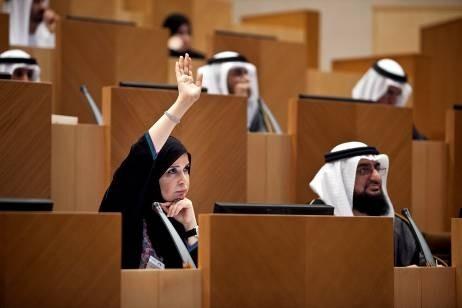
Tonga held its first ever Practice Parliament for Women on 10-11 April at the
NDI organized a gender assessment of Tunisia’s NCA to contribute to a fuller understanding of the
following critical factors:
NDI organized a gender assessment of Tunisia’s NCA to contribute to a fuller understanding of the
following critical factors:
MPs from around the world have urged parliaments everywhere to work to ensure the equal participation of indigenous peoples in parliaments and political decision-making becomes a reality.
Put simply, governance refers to decision-making by a range of interested people (or 'stakeholders') including those in formal positions of power and 'ordinary' citizens.
Put simply, governance refers to decision-making by a range of interested people (or 'stakeholders') including those in formal positions of power and 'ordinary' citizens.
The women form the majority of the electorate in Arunachal Pradesh but when it comes to contesting elections the numbers are at the odds with their population, with only 6 of them joining the fray for the ensuing Lok Sabha polls and Assembly elections.
In the halls of Leinster House, Constance Markievicz cuts a lonely figure as the only portrait of a female parliamentarian in the entire building.
Thirty representatives will take part in Tonga's first “Practice Parliament for Women” on April 10-11 in Nuku'alofa, a two-day event that aims to encourage women to run for parliament in the upcoming 2014 General Election in November.
PREMIUM TIMES investigations have shown that women are under represented at the ongoing national conference in Abuja.