Parliaments and Representatives

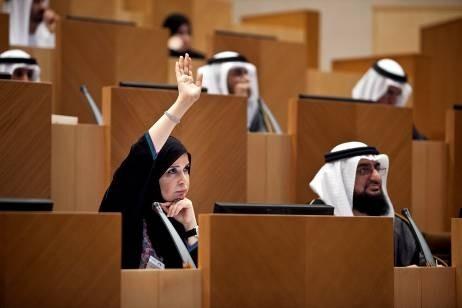
Democracy and the equal participation of men and women in the political arena are closely intertwined. No parliament or any decision-making body can claim to be representative without the participation of both men and women. As stated in the Universal Declaration on Democracy adopted by the Inter-Parliamentary Union’s Member Parliaments in 1997, "The achievement of democracy presupposes a genuine partnership between men and women in the conduct of the affairs of society in which they work in equality and complementarity, drawing mutual enrichment from their differences."

Recent years have seen a steady increase in the number of women in parliament, though the world average of less than 22 percent remains far from the goal of parity between women and men. The election of women to the highest positions of state and government in several countries has also contributed to the changing face of politics.

While the road to election is a difficult one, the challenges for women do not stop there. Once women enter parliament or other bodies, they are faced with many new challenges. Parliament is traditionally a male-oriented domain where the rules and practices have been written by men. It is, therefore, an ongoing challenge to transform parliament into a gender-sensitive environment, to ensure that actions are gender-sensitive and to guarantee that gender is mainstreamed throughout the legislature.

March 4, 2014
Burton describes Dáil as ‘a men’s club’, Ireland

Irish society continues to treat women as second-class citizens, according to a report dedicated to creating a more women-friendly

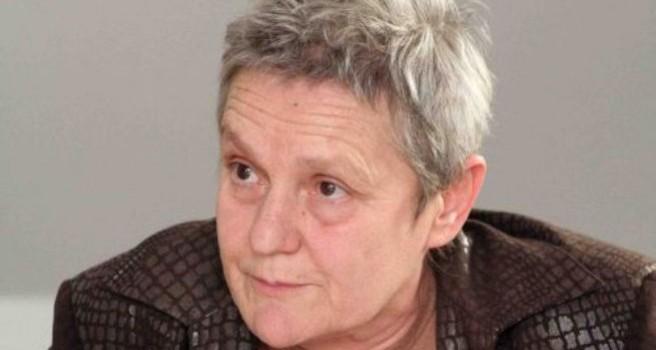
Sonja Lokar

Image

Sonja Lokar is a sociologist and a specialist in political party development, social welfare state issues and gender issues. She has published more than 300 articles in Slovene, Croat, English, French and German languages. She was active as a researcher and political analyst.

February 25, 2014
Palau senators inspired by Australian women politicians

Two senators from Palau say the women in politics they met during a recent visit to Australia have inspired them to be better politicians.

Event

Database on Women’s Caucuses

Back
February 24, 2014

Database on Women’s Caucuses

Want to know more about how women MPs are organizing themselves in parliaments around the world? IPU has launched a new global database on women’s caucuses in parliament to capture such information in one useful place.

Want to know more about how women MPs are organizing themselves in parliaments around the world? IPU has launched a new global database on women’s caucuses in parliament to capture such information in one useful place.

Charles Chauvel

Image

Charles Chauvel left the New Zealand Parliament in March 2013 to begin work in New York as the Parliamentary Development Advisor to the United Nations Development Programme.

Libya Status of Women Survey 2013

Back
February 19, 2014

Libya Status of Women Survey 2013

A nationwide survey examining civic, political and economic participation of Libyan Women and exploring public attitudes toward women's roles, rights and domestic violence.

A nationwide survey examining civic, political and economic participation of Libyan Women and exploring public attitudes toward women's roles, rights and domestic violence.

Event

A Conversation with House Democratic Leader Nancy Pelosi

Back

A Conversation with House Democratic Leader Nancy Pelosi

Nancy Pelosi is the Democratic Leader of the House of Representatives in the 113th Congress.  She served as the first woman Speaker of the House from 2007 to 2011, and she is also the first
February 13, 2014
Speaker wants more women in parliament, Tonga

The Speaker of the Tongan parliament, Lord Fakafanua today launched a program, the Practice Parliament for Women. The program aims at encouraging women to enter parliament.