“Free and Fair Elections in Cambodia”: Once a phrase commonly seen on banners in Phnom Penh, it has now taken to the streets.
Parliaments and Representatives
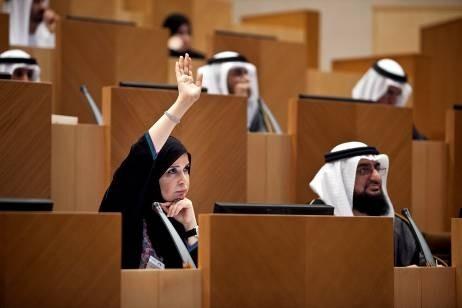
Democracy and the equal participation of men and women in the political arena are closely intertwined. No parliament or any decision-making body can claim to be representative without the participation of both men and women. As stated in the Universal Declaration on Democracy adopted by the Inter-Parliamentary Union’s Member Parliaments in 1997, "The achievement of democracy presupposes a genuine partnership between men and women in the conduct of the affairs of society in which they work in equality and complementarity, drawing mutual enrichment from their differences."
Recent years have seen a steady increase in the number of women in parliament, though the world average of less than 22 percent remains far from the goal of parity between women and men. The election of women to the highest positions of state and government in several countries has also contributed to the changing face of politics.
While the road to election is a difficult one, the challenges for women do not stop there. Once women enter parliament or other bodies, they are faced with many new challenges. Parliament is traditionally a male-oriented domain where the rules and practices have been written by men. It is, therefore, an ongoing challenge to transform parliament into a gender-sensitive environment, to ensure that actions are gender-sensitive and to guarantee that gender is mainstreamed throughout the legislature.
A poor record on female representation means Zambia lags behind other sub-Saharan African countries. Extravagant electoral campaigns may be to blame.
Russia is known for being a patriarchal country, but despite considerable barriers, some women leaders have managed to reach high levels in the political hierarchy.
The Power of Political Voice: Women's Political Representation and Crime in India
At current rates of progress it will take 120 years before women make up half of world leaders and more than 50 years before women are equally represented in the world’s parliaments, warns a new report published today (10 Sept 2013) by international development charity VSO.
The Road to substantive democracy: Women’s political participation in the Americas
Twenty-five out of the 123 lawmakers elected during the July 28 national election are female, the official election results have shown. Sunday.
Nova Peris has become the first Indigenous woman to be elected to the Federal Parliament. The Olympic hockey gold medal winner will take a place in the Senate representing the Northern Territory for Labor.
Ex-frontrunner Christine Quinn is the latest female candidate to start strong, but fade at the end. Are women voters part of the problem?
Pagination
- Previous page
- Page 291
- Next page