September 6, 2013
Constituent Assembly’s female representation shows poor quantity, good quality: women’s rights activists
Democracy and the equal participation of men and women in the political arena are closely intertwined. No parliament or any decision-making body can claim to be representative without the participation of both men and women. As stated in the Universal Declaration on Democracy adopted by the Inter-Parliamentary Union’s Member Parliaments in 1997, "The achievement of democracy presupposes a genuine partnership between men and women in the conduct of the affairs of society in which they work in equality and complementarity, drawing mutual enrichment from their differences."
Recent years have seen a steady increase in the number of women in parliament, though the world average of less than 22 percent remains far from the goal of parity between women and men. The election of women to the highest positions of state and government in several countries has also contributed to the changing face of politics.
While the road to election is a difficult one, the challenges for women do not stop there. Once women enter parliament or other bodies, they are faced with many new challenges. Parliament is traditionally a male-oriented domain where the rules and practices have been written by men. It is, therefore, an ongoing challenge to transform parliament into a gender-sensitive environment, to ensure that actions are gender-sensitive and to guarantee that gender is mainstreamed throughout the legislature.
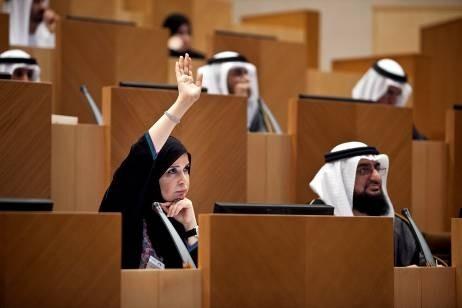
Across Canada, just one-quarter of our Members of Parliament are women. In many ridings, they’re seen as “sacrificial lambs” running for a party that’s unlikely to win.
Cate Faehrmann acknowledges the fact that she took a big risk in resigning from the NSW Legislative Assembly to contest the federal election on September 7. But for this traditional ‘greenie’ and founding director of GetUp!, “its absolutely a risk worth taking”.
The newly appointed Prime Minister of Senegal Ms Aminata Toure (in photo) has set up a 32 member cabinet following consultations with President Macky Sall and other political stakeholders.
The National Commission on the Status of Women (NCSW) and civil society members expressed concern over the reduced number of women’s seats in local government bills enacted in Punjab and Sindh in a meeting held on Tuesday.
Malaysia came in for particular praise at the ongoing 59th Commonwealth Parliamentary Conference here for instituting changes that allowed the participation of more women in the political process, at least within the Commonwealth grouping.
Few female candidates ran for seats in the by-elections for provincial and National Assembly seats in Pakistan recently, let alone won.
The Prime Minister of the Cook Islands says more women should run for Parliament but need to get there on their own merits.
Henry Puna says he strongly encourages women to take up positions of power in Cook Islands communities.
The Congress party is revamping its frontal organisation, Women Congress, in a bid to empower grassroots level women party workers politically, socially and economically.